


Selecting the correct bucket for an excavator is not merely a matter of matching pin sizes or digging capacity. It directly influences fuel economy, cycle times, and overall operational profitability. Many site managers and equipment owners overlook the relationship between bucket geometry and hydraulic efficiency, assuming that any bucket that fits the machine will perform adequately. This assumption is false. In fact, using an improperly shaped bucket can increase fuel consumption by as much as 20 percent on a daily basis. When fuel prices remain volatile and project margins tighten, such waste becomes unacceptable. This article provides a fundamental education on excavator bucket shapes, explaining why each design exists, how shape affects resistance and penetration, and why the wrong choice leads to unnecessary fuel burn. Whether you operate new machines or rely on used excavators, understanding bucket geometry is a low-cost, high-return skill. Moreover, the same principles apply to other machinery such as backhoes, wheel loaders, and draglines, making this knowledge broadly valuable across earthmoving operations.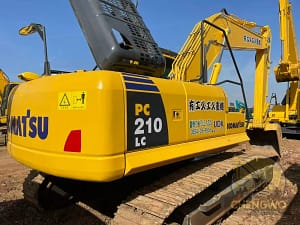
2. Fundamentals of Excavator Bucket Design
2.1 Key Geometric Parameters
Every excavator bucket consists of several critical dimensions: width, depth, heel length, side cutter angle, and tip radius. The relationship between these parameters determines how the bucket enters, carries, and releases material. A wide, shallow bucket behaves differently from a narrow, deep bucket even when both have the same heaped capacity. The cutting edge angle relative to the stick also plays a major role. When the angle is too aggressive, the bucket bites deeper than necessary, increasing draft force. When too flat, the bucket slides over the material without penetrating, requiring repeated passes. Both scenarios raise fuel consumption because the excavator’s hydraulic system must generate higher pressure to overcome ineffective digging geometry.
2.2 Common Bucket Shapes and Their Intended Uses
Manufacturers produce dozens of bucket profiles, but four basic shapes cover most applications. The general-purpose bucket has a moderate depth-to-width ratio and a curved side shell, designed for loose soil, sand, and gravel. The trenching bucket is narrow and deep, optimized for digging straight, narrow trenches with minimal disturbance to adjacent ground. The rock bucket features reinforced wear strips, a shallow profile, and a tight tip radius, allowing it to pry fractured rock without bending teeth or stalling the hydraulic circuit. The ditching or cleanup bucket is wide and shallow, often without teeth, intended for grading, sloping, and final trim work. Each shape alters the resistance curve during penetration and prying. Using a rock bucket in loose sand forces the operator to drag a heavy, blunt tool through low-resistance material, wasting energy. Conversely, using a general-purpose bucket in blasted rock leads to constant stalling, high-pressure spikes, and excessive fuel flow to maintain breakaway force.
2.3 How Shape Affects Hydraulic Efficiency
Excavator hydraulic systems operate most efficiently when pump pressure remains within a design window known as the “power match.” When bucket shape creates digging resistance far above or below the machine’s optimal pressure range, the pump compensates by increasing flow or pressure, both of which consume more fuel. Modern excavators use variable-displacement pumps that adjust swash plate angles based on load sensing. A mismatched bucket sends erratic load signals—sudden spikes when hitting hard material, then drops when the bucket breaks free. These fluctuations force the pump to overshoot and correct continuously, burning fuel without productive work. In extreme cases, the relief valve opens, converting hydraulic energy into heat. Every minute spent with the relief valve cracking represents pure fuel waste. Proper bucket shape keeps digging forces within the smooth, continuous part of the pump’s performance curve, reducing fuel consumption per cubic meter moved.
3. The Hidden Fuel Cost of Wrong Bucket Shapes
3.1 Quantifying the 20 Percent Waste
Field studies and manufacturer telematics data consistently show that mismatched buckets increase fuel burn by 15 to 25 percent compared to optimized attachments. A typical 20-ton excavator digging common earth consumes roughly 12 to 15 liters of diesel per hour when equipped with the correct general-purpose bucket. That same machine, fitted with an overly aggressive rock bucket or an excessively wide cleanup bucket, can burn 18 liters or more to move the same volume of material. Over a 2,000-hour working year, the difference amounts to 6,000 to 10,000 liters of extra fuel. At current global diesel prices, that translates to thousands of dollars lost annually per machine. For a fleet of used excavators, which may have less efficient pumps to begin with, the penalty can be even worse because they lack the adaptive electronic controls of newer models. The 20 percent figure is not an exaggeration; it is a conservative average drawn from dozens of real-world site audits.
3.2 Why Operators Often Accept Inefficiency
Many operators have never experienced a perfectly matched bucket, so they adapt their technique to compensate for poor geometry. They learn to feather the controls, make multiple passes, or partially fill the bucket to avoid stalling. These workarounds hide the true inefficiency but do not eliminate it. Management may not notice the slow cycle times or slightly higher fuel bills because no baseline exists for comparison. Additionally, rental yards and used equipment dealers often supply whatever bucket is available, not necessarily the correct shape for the job. Site supervisors assume that if the bucket fits the pins, it should work. This assumption ignores decades of engineering research on soil-tool interaction. Breaking this cycle requires basic education—exactly what this article provides.
3.3 The Vicious Cycle of Wear and Inefficiency
A wrong-shaped bucket not only wastes fuel directly but also accelerates wear on both the bucket and the excavator. Excessive digging resistance increases stress on the stick, boom, and slew ring. Over time, this leads to premature pin wear, hydraulic hose fatigue, and even structural cracking. As components wear, efficiency drops further, and the operator compensates with more throttle or faster hydraulic flow. The result is a self-reinforcing cycle of fuel waste and component degradation. Used excavators are especially vulnerable because their undercarriage and hydraulic systems already have some wear. Adding a mismatched bucket multiplies the problem, turning a workable machine into a fuel-guzzling liability. This is why any evaluation of used excavators should include a review of the available bucket inventory and a clear understanding of which shape matches the predominant site material.
4. How Bucket Shape Affects Digging Efficiency by Material Type
4.1 Loose Soils and Granular Materials
For sand, gravel, topsoil, or crushed stone, the ideal bucket shape is wide and moderately deep with a straight or slightly curved cutting edge. This profile allows the bucket to fill quickly without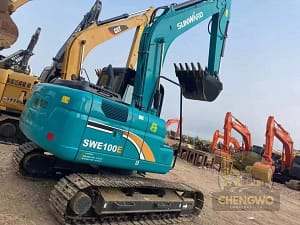 excessive breakout force. A narrow trenching bucket in loose material forces the operator to move side to side multiple times to achieve the same volume, increasing travel distance and fuel consumption. Similarly, a rock bucket with a small tip radius and heavy wear plates acts like a plow, pushing material aside rather than scooping it. The hydraulic system must work against this plowing resistance, burning extra fuel. A general-purpose bucket with a width equal to 80 to 100 percent of the track width offers the best fuel economy in granular soils because it matches the natural flow of material into the shell.
4.2 Cohesive Soils (Clay, Hardpan, Compacted Fill)
Clay and compacted soils present a different challenge. Here, penetration force matters more than fill rate. A bucket with a longer heel, sharper tip angle, and narrower width concentrates breakout force into a smaller area, allowing the cutting edge to slice through cohesive material. Wide buckets in clay tend to ride up to the surface because the adhesion between clay and steel creates suction. The operator then must curl and crowd repeatedly to break the bond, each motion drawing hydraulic power. A dedicated clay bucket or a general-purpose bucket with bolt-on wear strips and a pronounced tip radius reduces suction and improves penetration. Fuel savings come from shorter cycle times and fewer required passes. In heavy clay, using the wrong shape can double digging time, directly doubling fuel consumption per cubic yard.
4.3 Fractured Rock and Shotcrete
Rock buckets are heavily reinforced, with shallow profiles, small tip radii, and tight clearances between teeth. Their shape prioritizes prying force over capacity. When used correctly in blasted rock or demolition debris, they are highly fuel-efficient because they transfer maximum hydraulic force to the rock face. However, using a rock bucket in any other material—even moderately hard clay—turns that advantage into a penalty. The shallow profile limits fill volume per cycle, so the excavator must make more passes to load a truck. The small tip radius creates high point loads that can damage softer materials but does nothing to improve scooping. The weight of the reinforced bucket itself adds several hundred kilograms, increasing the load on the excavator’s boom cylinders with every lift. For used excavators with older hydraulic systems, this extra weight alone can raise fuel consumption by 3 to 5 percent. The lesson is simple: reserve rock buckets for rock, and nothing else.
4.4 Hybrid and Multimaterial Sites
Many job sites contain a mixture of soil types—sandy loam over clay, gravel pockets within hardpan, or fill material with random debris. No single bucket shape is perfect for all conditions, but some shapes are more forgiving than others. A general-purpose bucket with a moderately curved side shell, replaceable cutting edge, and tooth configuration of moderate aggressiveness handles most mixed conditions with acceptable fuel efficiency. Conversely, extreme shapes (very narrow trenching, very wide cleanup, or shallow rock buckets) perform poorly as soon as the material deviates from their design target. Site managers should stock two or three bucket shapes per excavator and change them when material changes significantly. The labor cost of a bucket swap is quickly recovered through fuel savings, especially when fuel exceeds $1 per liter.
5. Selecting the Right Bucket for Your Excavator
5.1 Matching Bucket Capacity to Machine Power
One of the most common mistakes is selecting a bucket with a rated capacity that exceeds the excavator’s ability to fill it efficiently. Manufacturers publish bucket capacity charts based on ideal material density and digging conditions. When an operator tries to fill an oversized bucket in heavy material, the hydraulic system reaches relief pressure before the bucket is half full. The operator then either settles for partial loads or forces the bucket deeper, creating unnecessary stress and fuel waste. Conversely, an undersized bucket completes full cycles but requires more cycles to move the same volume, increasing travel time and fuel consumption per ton moved. The correct size allows the excavator to fill the bucket completely without stalling, using approximately 80 to 90 percent of available hydraulic pressure. This “sweet spot” varies by material density but can be calculated from the machine’s breakout force specifications.
5.2 The Role of Tooth Configuration and Adapters
Teeth are not part of the bucket shell shape, but they profoundly affect how the bucket interacts with material. Long, sharp teeth improve penetration in hard soils but increase resistance in loose material because they act like anchors. Short, blunt teeth reduce penetration but allow smoother filling in granular material. The angle and spacing of teeth also matter. Wide spacing creates individual furrows, reducing the effective cutting width and requiring more passes. Narrow spacing causes material to bridge between teeth, increasing weight and drag. For fuel efficiency, the tooth configuration should complement the bucket shape. A general-purpose bucket with moderate teeth works well in most soils. A rock bucket with short, robust teeth spaced close together is ideal for fractured stone. Changing teeth is cheaper than changing buckets, so fine-tuning tooth selection is an excellent first step before buying a new bucket.
5.3 When to Upgrade from Used Excavator Buckets
Used excavators often come with old, worn, or mismatched buckets. The initial purchase price of a used machine may seem attractive, but if the bucket is the wrong shape for your application, you will pay the difference in fuel within months. Inspecting the bucket shape should be part of any pre-purchase evaluation. Look for signs of modification—welded-on plates, altered cutting edges, or added wear strips that change the original geometry. Ask about the previous owner’s typical material. If that material differs from yours, factor a new bucket into the budget. Similarly, when buying used buckets from equipment resellers, verify the intended application. A “general purpose” tag does not guarantee optimal shape for your specific soil. Measure the depth-to-width ratio, tip radius, and side cutter angle against manufacturer recommendations for your excavator model.
5.4 The Interaction with Other Machinery
The principles of bucket shape selection extend beyond excavators. Other machinery, such as wheel loaders, backhoe loaders, and skid steers, also suffer fuel penalties from mismatched buckets. A wheel loader with a wide, shallow bucket in cohesive clay will spin its tires or stall the torque converter, burning fuel without moving material. A backhoe with an overly aggressive trenching bucket in loose gravel will fill inefficiently, requiring multiple attempts per trench foot. If your site uses a mix of other machinery, standardizing bucket shapes across the fleet by application can simplify training and reduce fuel waste. For example, designate one shape for “soft digging” and another for “hard digging,” and ensure all operators and equipment managers understand which machine gets which bucket. This coordination pays dividends in fuel bills and cycle time consistency.
6. Practical Strategies to Reduce Fuel Waste
6.1 Conducting a Simple Bucket Audit
Every site can perform a basic fuel efficiency audit without specialized equipment. Choose one excavator and two different bucket shapes. For one hour, dig a measured volume of material (for example, load ten 20-ton trucks) with bucket A, recording total fuel used via the machine’s fuel gauge or telematics. Repeat the same task with bucket B under identical material and operator conditions. Compare fuel per ton moved. The difference is often eye-opening. Many site managers report variations of 15 to 25 percent between buckets they thought were “basically the same.” Document these results and share them with operators. Once the data proves the waste, securing approval for a new, correctly shaped bucket becomes much easier.
6.2 Operator Training on Bucket Selection
Even the best bucket shape will waste fuel if the operator uses poor technique. Training should cover how to read material conditions, when to change buckets, and how to adjust digging depth and angle to match the bucket’s design. For example, a wide cleanup bucket works best with a shallow, fast pass rather than a deep, slow curl. A rock bucket requires a slow, steady crowd with high breakout force, not rapid cycling. Operators who understand the physics of soil-tool interaction will naturally choose the most efficient technique. Pair this training with a simple visual guide posted in the cab: “For sand/gravel → General bucket; for clay → Narrow bucket; for rock → Rock bucket.” When operators see fuel consumption numbers tied to their daily choices, they become partners in efficiency rather than passive lever pullers.
6.3 Maintenance Practices That Preserve Shape Efficiency
Bucket shape degrades over time due to wear. A cutting edge that has rounded from abrasion requires more force to penetrate soil, increasing fuel consumption. Side cutters that have worn thin allow material to escape around the bucket edges, reducing fill efficiency. Heel plates that have become smooth or bent alter the bucket’s angle of attack. Regular maintenance—replacing cutting edges, rebuilding side cutters, and repairing heel wear—restores the original shape and recovers fuel efficiency. For used excavators and older machines, scheduling bucket maintenance as frequently as engine oil changes ensures that shape-related losses do not accumulate. A simple rule: if the cutting edge shows more than 20 millimeters of rounding, replace it. The cost of consumables is negligible compared to the fuel saved.
6.4 When to Invest in a New Bucket
If your current bucket collection consists of mismatched, worn, or repurposed attachments, buying one correctly shaped bucket may be the highest-return investment you can make. A new general-purpose bucket for a 20-ton excavator costs roughly 2,000to4,000 depending on features. Saving 20 percent on fuel—about 4,000to6,000 per year at typical usage—pays for the bucket in less than 12 months. After that, every saved liter of diesel goes directly to profit. For used excavators that already operate with lower fuel efficiency due to engine and pump age, the relative improvement from a correct bucket shape can be even larger. Do not let the initial cost of a new bucket deter you. Calculate the fuel savings over one year using your actual hourly fuel burn and hourly rate. The math almost always favors buying the right tool.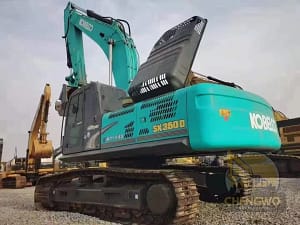
7. Common Myths About Excavator Buckets and Fuel
7.1 Myth: Bigger Buckets Always Move More Material
A larger bucket does not guarantee higher productivity. If the excavator cannot fill it completely due to material density or hydraulic limitations, the larger bucket simply adds dead weight. Each empty or half-full cycle wastes fuel moving the bucket itself. The correct metric is fuel per ton of material moved, not heaped capacity per cycle. Many site managers have switched from oversized buckets to properly sized ones and seen both fuel consumption drop and cycle time improve because the excavator operates in its power band.
7.2 Myth: Teeth Are Optional for Fuel Savings
Some operators remove teeth thinking that less weight and fewer protrusions reduce fuel consumption. This is rarely true except in very soft, non-abrasive materials like loose sand. In most soils, teeth concentrate the digging force, allowing the bucket to penetrate with lower overall resistance. Removing teeth forces the entire cutting edge to act as a blunt plow, increasing draft force and fuel use. The only exception is finishing or grading work where a smooth edge produces a better surface. For production digging, keep teeth installed and sharp.
7.3 Myth: Bucket Shape Only Affects Productivity, Not Fuel
Productivity and fuel consumption are two sides of the same coin. Any factor that reduces cycles per hour increases fuel per unit of material because the engine and hydraulic pump continue running during non-productive time. A mismatched bucket that requires three passes instead of two to fill a truck does not just take 50 percent longer; it also consumes 50 percent more fuel for the extra pass plus additional fuel for extended idling between passes. The cumulative effect is often larger than operators realize.
8. Conclusion
Choosing the correct excavator bucket shape is one of the most cost-effective ways to reduce fuel consumption on any earthmoving site. The 20 percent waste figure is not theoretical—it is a measurable reality on thousands of job sites where mismatched buckets have become the norm. Whether you operate brand-new machines or used excavators, the principles remain the same: match the bucket’s geometry to the material, maintain its shape through regular edge and cutter replacement, and train operators to recognize when a different bucket would improve efficiency. The same logic applies to other machinery, including wheel loaders, backhoes, and skid steers. By applying the fundamental lessons in this article, you will not only save fuel but also reduce component wear, shorten cycle times, and increase overall site profitability. The next time you walk past a bucket sitting on the ground, take a moment to assess its shape. Ask yourself: Is this the right tool for the material we are moving today? If the answer is uncertain, run a simple fuel audit. The results will speak for themselves, and the savings will start immediately.