


.webp)
1. Understanding the Vibration Threat to Your Excavator’s Main Pump
Hydraulic hammers are among the most powerful attachments for an excavator. They deliver immense impact energy to break rock, concrete, and frozen ground. However, this same impact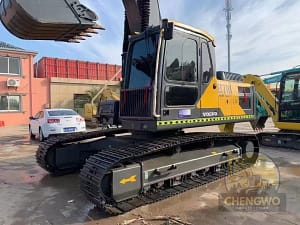 energy generates strong vibrations that travel back through the boom, arm, and ultimately into the main hydraulic pump of your machine. For owners of used excavators, this risk is even more pronounced because older pumps may already have worn seals, bearings, or pistons that are less tolerant of additional stress. The main pump is the heart of the hydraulic system, converting mechanical power from the engine into hydraulic flow and pressure. When violent hammer vibrations enter the pump, they can cause a cascade of failures: cracked valve plates, damaged cylinder blocks, broken piston slippers, and premature bearing fatigue. Over time, even minor vibrations that seem harmless can lead to catastrophic pump failure, costly downtime, and expensive repairs. Understanding how vibration affects each internal component is the first step toward effective prevention.
The primary mechanism of vibration damage is repeated shock loading. Each blow of the hammer sends a pressure spike through the hydraulic circuit. While modern hammers have some internal damping, the energy cannot be completely absorbed. The main pump, often mounted directly to the engine flywheel housing or via flexible couplings, receives these shocks. If the pump’s internal rotating group is not perfectly aligned or if the mounting is rigid, the bearings suffer microfractures. Another subtle effect is cavitation: vibrations can create pressure fluctuations that cause bubbles to form in the hydraulic oil, which then implode against metal surfaces, eroding them. This is especially dangerous for used excavators because cavitation damage accumulates silently. Additionally, the pilot control system and main control valves can transmit vibrations to the pump’s swashplate and servo pistons, leading to erratic regulation and overheating. Recognizing these pathways—mechanical shock, hydraulic spikes, and resonance—allows operators and maintenance teams to target specific solutions. In the following sections, we will explore practical, engineering-based methods to shield your main pump from the destructive energy of a hydraulic hammer, ensuring that both new and other machinery equipped with hammers operate reliably for years.
2. Matching the Hammer to Your Excavator and Other Machinery
One of the most overlooked factors in preventing pump damage is selecting a hydraulic hammer that is correctly sized for your carrier. Whether you operate used excavators or brand-new units, an oversized hammer will generate excessive impact energy and vibration that the pump’s damping capacity cannot handle. Conversely, an undersized hammer forces the operator to run at higher flow and pressure settings to achieve adequate breaking power, which also increases vibration amplitude and frequency. Industry standards recommend that the hammer’s operating weight be between 8% and 12% of the excavator’s operating weight. For other machinery such as backhoe loaders, skid steers, or wheel loaders adapted for hammer use, the ratio may differ, but the principle remains: match the hammer’s impact class to the machine’s hydraulic output and structural rigidity.
When purchasing used excavators for hammer work, you should verify the machine’s original auxiliary hydraulic flow and pressure ratings. Many older machines lack the high-flow circuits needed for modern hammers, forcing operators to modify relief valve settings. This practice drastically increases vibration because the pump must constantly work near its pressure limit. A better approach is to select a hammer with an integrated pressure relief valve and a flow regulator that matches the pump’s characteristic curve. For other machinery, like a compact track loader, the hydraulic system often uses a gear pump instead of a piston pump. Gear pumps are more tolerant of vibration but still suffer from seal and bearing damage. Therefore, always consult the hammer manufacturer’s compatibility chart. Additionally, consider the hammer’s blow frequency. Lower-frequency hammers (300–500 bpm) produce larger individual shocks, while higher-frequency models (600–1200 bpm) generate smaller but more rapid vibrations. The main pump’s natural frequency—typically between 100 and 300 Hz depending on its design—can be excited by harmonics from the hammer. If the hammer’s operating frequency matches a resonant frequency of the pump mounting or the pump’s internal components, vibration amplitudes can multiply tenfold. To avoid this, ask your hammer supplier for vibration spectrum data and compare it with your pump’s specifications. For used excavators, it is wise to perform a simple resonance test by running the hammer at different engine RPMs while monitoring the pump housing with an accelerometer. A sudden increase in vibration at a specific RPM indicates critical resonance, which can be mitigated by changing engine speed or adding damping mass.
3. Optimizing the Mounting and Coupling System
The mechanical connection between the hammer, the excavator’s attachment bracket, the boom, and finally the main pump plays a decisive role in vibration transmission. Many pump failures on used excavators can be traced back to worn or rigid mounting systems. Modern excavators are designed with rubber isolators at the cab and engine mounts, but these are often insufficient for hammer-induced vibrations. To protect the main pump, you need a layered isolation strategy. Start with the hammer-to-stick connection. Standard pin-on brackets transmit nearly all vibration directly into the arm. Retrofitting a hammer with an intermediate vibration dampener—a sandwich of high-durometer rubber or polyurethane with steel plates—can reduce transmitted vibration by 40% to 60%. These dampeners are available as aftermarket kits for most hammer models and are highly recommended for used excavators because they also protect the boom’s pivot pins and bushings.
Next, examine the pump’s own mounting. Most main pumps are bolted directly to an aluminum or cast-iron bracket that is itself bolted to the engine block or flywheel housing. This rigid path allows vibration to travel from the hammer, through the tracks, into the engine frame, and then into the pump. Adding flexible couplings between the engine and pump is critical. The industry standard is a jaw-type or tire-type coupling with a rubber element. However, these couplings are designed for torsional vibration from the engine, not for axial or radial shocks from hammer impacts. For severe hammer applications, consider upgrading to a double-flex coupling (e.g., a Lovejoy with a composite insert) that can accommodate misalignment and absorb shock. In addition, install the pump on a subframe that is isolated from the engine frame using four or six conical rubber mounts. Ensure the mounts are preloaded correctly—too soft allows excessive movement, too hard transmits vibration. A rule of thumb is that the static deflection under pump weight should be between 5 and 8 mm. For other machinery like skid steer loaders, where the pump is often belt-driven, the belt itself provides some damping, but the pump mounting plate should still use elastomeric bushings.
Do not overlook the hydraulic hoses connecting the pump to the main control valve and to the hammer. Rigid steel lines can act as vibration conductors. Replace sections of steel line with spiral-wound, high-impulse hydraulic hoses that have a rubber cover and a textile braid. These hoses absorb a surprising amount of high-frequency vibration because the rubber layers dissipate energy as heat. Also, ensure that the hose routing does not create a rigid anchor point near the pump; use spring-type hose clamps with rubber grommets. For used excavators that have undergone previous repairs, check that the pump’s mounting bolts are tightened to the correct torque and that no washers or spacers are missing. Loose bolts amplify vibration through impact (hammering of the bolt head against the bracket), which directly damages the pump housing threads and can lead to oil leaks.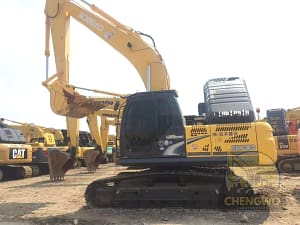
4. Installing Dedicated Vibration Damping Components
Beyond basic mounting improvements, you can add specialized vibration damping devices to your hydraulic system. These are particularly valuable for used excavators that lack factory-installed damping features. The most effective device is an in-line accumulator mounted on the pump’s discharge line. Hydraulic accumulators, specifically bladder or piston types, act as shock absorbers by compressing nitrogen gas when a pressure spike occurs. When the hammer strikes, the sudden rise in pressure at the pump outlet is partially diverted into the accumulator, preventing the spike from slamming against the pump’s valve plate and pistons. For hammer applications, a 1- to 2-liter accumulator placed within 30 cm of the pump outlet can reduce pressure peak amplitude by 70%. However, ensure that the accumulator’s pre-charge pressure is set to 60–80% of the system’s working pressure; too low a pre-charge makes the accumulator ineffective, and too high makes it behave like a rigid chamber. Check the pre-charge weekly using a nitrogen gauge because gas leakage is common on used excavators.
Another powerful component is a tuned mass damper (TMD) attached to the pump housing. A TMD consists of a metal weight (typically 2–5 kg) connected to the pump via a spring and a viscous damper. When the pump vibrates at its natural frequency, the TMD oscillates out of phase, canceling the motion. You can purchase off-the-shelf TMDs from industrial vibration control suppliers, but make sure they are tuned to the pump’s dominant vibration frequency (measured with an accelerometer during hammer operation). For other machinery such as wheel loaders that use a hydraulic hammer, the pump is often mounted sideways, and a TMD can be bolted directly to the pump’s end cover. If a commercial TMD is not available, you can improvise by attaching a heavy steel block through a layer of Sorbothane or other viscoelastic polymer. This is not as precise but still provides some broadband damping.
Do not forget the pilot hydraulic circuit. The pilot pump (often a gear pump mounted on the back of the main pump) is highly sensitive to vibration because its small gears can chatter. Install a small pulsation damper—a coiled steel tube (one or two turns) with an enlarged diameter—in the pilot line before it enters the main pump’s regulator. This coiled tube acts as a low-pass filter, smoothing out high-frequency vibrations that would otherwise interfere with the pump’s swashplate control. For used excavators that have accumulated hours, the pilot line may already have work-hardened and become brittle; replace it with a new, annealed tube for better flexibility and damping. Additionally, consider applying a layer of mastic vibration-damping tape (commonly used in automotive sound deadening) directly onto the pump’s housing. While this does little for low-frequency shocks, it effectively reduces high-frequency “ringing” that can loosen internal fasteners over time. The tape should be applied to clean, degreased surfaces and rolled firmly. This low-cost measure is especially recommended for other machinery in rental fleets, where hammer attachments are frequently swapped and vibration exposure varies.
5. Operating Techniques to Minimize Shock Transmission
Even with the best hardware, improper operation can destroy your main pump within hours. The way you control the excavator or other machinery during hammer work directly influences the vibration energy that reaches the pump. The golden rule is to avoid “blank firing” (operating the hammer without the tool pressed firmly against the material). When the hammer strikes in mid-air, the piston accelerates to its maximum stroke without the resistance of the tool, generating a violent shockwave that travels back through the hydraulic circuit. This shock is three to five times more severe than a normal strike. Always ensure that the hammer’s tool is perpendicular to the working surface and that you apply downward pressure—just enough to compress the hammer’s internal buffer spring but not so much that you lift the tracks or tires. On used excavators, worn hydraulic cylinders may not hold the pressure needed to keep the tool in contact; rebuild or replace leaking cylinder seals before hammer work.
Another critical practice is to avoid operating the hammer continuously for more than 15 seconds at a time. Extended continuous striking causes the hydraulic oil to overheat, reducing its viscosity and its ability to dampen internal pump components. Overheated oil also accelerates cavitation. Instead, use a “pulse” technique: strike for 10–15 seconds, then pause for 5 seconds to allow the oil to flow through the cooler and for the pressure spikes to dissipate. During the pause, keep the engine at full RPM but disengage the hammer circuit (if your machine has a hammer pedal or proportional auxiliary control). This gives the main pump a brief recovery period. For other machinery like skid steers with smaller hydraulic reservoirs, the oil heats up even faster; reduce the strike duration to 8–10 seconds.
Pay attention to engine speed. Many operators mistakenly run the engine at full throttle, believing this gives more hammer power. In reality, hammer performance is determined by hydraulic flow, not engine RPM alone. Running at maximum RPM increases the pump’s rotational speed, which amplifies any imbalance or vibration because the centrifugal forces on the pump’s rotating group are proportional to the square of the speed. For most used excavators, the optimal engine speed for hammer work is 70–80% of rated maximum. At this range, the pump’s bearings see lower dynamic loads, and the hammer’s impact frequency is reduced slightly, which often moves it away from resonance frequencies. Use a handheld tachometer or the machine’s display to set the speed precisely. Also, ensure that the hammer’s back-pressure (return line pressure) is below 15 bar (220 psi). Excessive back-pressure can be caused by undersized return filters or long, small-diameter hoses. High back-pressure prevents the hammer from fully retracting the piston, leading to “double hits” that send two pressure spikes in rapid succession into the pump. Measure back-pressure with a gauge tee’d into the hammer return line while operating at normal conditions. If it exceeds specifications, install a larger return line or a free-flow return filter bypass.
6. Regular Maintenance and Inspection Protocols
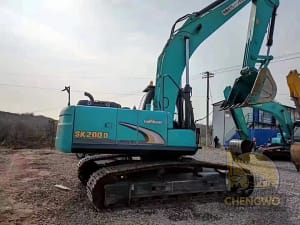 Preventive maintenance is the backbone of protecting your main pump from vibration damage, especially on used excavators where wear has already begun. You need a maintenance schedule that goes beyond the standard oil and filter changes. Start with hydraulic oil analysis every 250 hours of hammer use. Vibration accelerates particle generation: small metal flakes from the hammer’s internal parts and from the pump’s own wear circulate in the oil. These particles act as abrasives, further damaging pump surfaces. A particle count (ISO 4406 code) should stay below 18/16/13. If it rises, change the oil and filters immediately. For other machinery used in hammer applications, consider using a higher-viscosity oil (e.g., ISO 68 instead of ISO 46) because thicker oil provides a better damping film between pump components. However, check the manufacturer’s approval first.
Inspect the pump’s mounting bolts and flexible couplings weekly. Vibration loosens fasteners over time. Use a torque wrench to verify that all bolts are at the specified torque. Apply thread-locking compound (medium strength, e.g., Loctite 243) to bolts that have repeatedly loosened. For the coupling, look for signs of rubber degradation: cracks, glazing, or chunks missing. Replace the coupling element every 500 hours or annually, whichever comes first. On used excavators, the coupling may have been previously replaced with a cheaper, less damped version; upgrade to an OEM or high-quality aftermarket coupling with a blue or red color coding indicating high-shock rating. Also, check the pump’s input shaft for axial play. Insert a dial indicator against the shaft end and pry gently. Play exceeding 0.2 mm indicates worn bearings, which will quickly worsen under hammer vibration. If found, schedule a pump rebuild immediately.
Another critical inspection point is the hammer’s own accumulator (the gas-filled chamber inside the hammer that absorbs recoil). A discharged hammer accumulator eliminates the primary vibration protection. Test the hammer’s accumulator pressure weekly using the manufacturer’s test kit. The correct pressure is usually between 10 and 20 bar above the hammer’s operating pressure. If the pressure is low, recharge with nitrogen—never use compressed air because oxygen can cause explosions. Symptoms of a bad accumulator include a dull, mushy impact sound and increased machine vibration. For used excavators that come with an unknown maintenance history, assume the hammer’s accumulator is discharged and have it recharged or replaced before use. Similarly, inspect the hammer’s through-bolts and tie rods. Loose through-bolts allow the hammer’s housing to flex, generating asymmetric vibration that couples into the boom and pump. Torque them to spec every 40 hours.
Don’t neglect the excavator’s cab and engine mounts. Worn cab mounts increase the vibration felt by the operator, but they also indicate that the engine and pump mounts may be equally worn. If you see cracked rubber or collapsed engine mounts, replace them in sets. The pump’s subframe mounts, as mentioned earlier, should be inspected for permanent compression set. Measure the height of each mount under the pump’s weight; if it has reduced by more than 20% from the original, replace it. For other machinery like backhoes, the engine is often mounted sideways, and a single worn mount can cause the pump drive belt to misalign, introducing additional vibration from belt flutter. Keep a log of all these inspections, noting the date, hour meter reading, and any corrective action. This log becomes invaluable for troubleshooting and for resale value of the machine.
7. Special Considerations for Used Excavators and Other Machinery
Used excavators represent a significant portion of the construction equipment market, and many are sold specifically for hammer work due to their lower initial cost. However, they also carry hidden risks that can accelerate pump failure if vibration protection is not upgraded. When purchasing a used excavator intended for hammer use, have the main pump’s pressure and flow output tested by an independent hydraulic shop. A pump that is already producing less than 85% of its rated flow is likely to have internal clearances enlarged by prior wear. Such a pump will be more susceptible to vibration-induced leakage because the pistons and cylinder block can move radially more than designed. The cost of rebuilding the pump (1500–4000) before mounting a hammer is often less than the cost of a catastrophic failure plus downtime. Also, inspect the machine’s main relief valve. On many used excavators, previous owners may have shimmed the relief valve to increase pressure for an undersized hammer. This practice increases the pressure spikes seen by the pump. Reset the relief valve to factory specification based on the machine’s service manual.
For other machinery that is not a dedicated excavator—such as wheel loaders, telehandlers, or mini skid steers—the hydraulic pump is often a gear pump or a variable displacement piston pump with different vibration sensitivities. Gear pumps are more robust against shock but still fail when their aluminum housings crack due to repeated pressure spikes. Installing a shock-absorbing hose (as mentioned in section 3) between the pump outlet and the hammer circuit is even more critical because gear pumps have no internal damping. Additionally, other machinery typically has smaller oil coolers and reservoirs, leading to faster oil heating. Monitor the oil temperature with an infrared thermometer on the pump housing; if it exceeds 85°C (185°F) during hammer operation, stop and let it cool. Consider adding an auxiliary oil cooler with a thermostatically controlled fan for machines that will spend more than 20% of their operating hours hammering. For wheel loaders that use a hammer mounted on a quick coupler, ensure the coupler is a positive-locking type (hydraulic or mechanical) that does not introduce play. Any slack in the coupler translates into additional impact forces when the hammer strikes, multiplying vibration.
Finally, when using other machinery such as a compact excavator (which is still an excavator but smaller), the main pump is often a tandem pump (one section for travel, one for work). Vibrations from the hammer can cause the internal separating plate between pump sections to crack. To prevent this, install a pressure pulsation damper on the inlet line to the pump section supplying the hammer. This damper can be as simple as a 2-liter volume chamber with a rubber bladder—essentially a low-pressure accumulator. It smooths out the suction side pulsations that occur when the hammer’s valve spool opens and closes rapidly. Also, for all used excavators and other machinery, replace the hydraulic filters with high-beta (β>200) filters rated for 3 to 5 micron absolute. Fine filtration removes the microscopic particles generated by vibration-induced wear before they can lap the pump’s bearing races. Use a filter with a bypass valve set to open at a lower pressure than normal (e.g., 2.5 bar instead of 5 bar) to ensure flow even if the filter clogs, because a clogged filter in bypass mode still provides some filtration but prevents cavitation from filter restriction.
8. Long-Term Strategies and System Upgrades
To achieve the highest level of protection for your main pump, consider integrating the aforementioned techniques into a comprehensive vibration management system. This is especially valuable for fleet owners who operate multiple used excavators and other machinery with interchangeable hammers. Start by creating a baseline vibration measurement for each machine-pump combination. Rent or purchase a portable vibration analyzer (e.g., a Fluke 810 or similar) and attach an accelerometer to the pump housing at a machined surface near the bearing location. Run the hammer on a representative material (medium-hard rock or concrete) for two minutes, recording the overall vibration velocity (mm/s RMS) and the dominant frequency. For healthy pumps, the vibration velocity should be below 11 mm/s RMS (ISO 10816-3 standard for pump vibration). If it exceeds 18 mm/s, immediate action is required. Use this baseline to evaluate the effectiveness of each improvement: after adding dampeners, after replacing couplings, after changing operating techniques, etc. Aim to bring the vibration down to below 7 mm/s for long pump life.
Another advanced strategy is to retrofit your used excavators with an active vibration control system. These systems use an electronic controller, an accelerometer on the pump, and a hydraulic servo valve that modulates the pump’s swashplate angle slightly out of phase with the incoming vibration. While more common in industrial machinery, several aftermarket suppliers now offer compact active mounts for mobile hydraulics. The cost (around 2,000–4,000) can be justified if you do hundreds of hours of hammer work per year. For other machinery with simpler electronics, a passive hydraulic low-pass filter is a cheaper alternative. This filter consists of a long, coiled steel tube (10–20 meters of 10mm tubing coiled into a 30cm diameter) inserted between the pump outlet and the hammer valve. The tube’s hydraulic inductance attenuates high-frequency pressure ripples, converting vibration energy into heat. You must ensure that the tube is properly supported to avoid mechanical fatigue; mount it on rubber grommets. The pressure drop across the coil should be less than 10 bar at the maximum flow; test with a differential pressure gauge.
Do not forget operator training as a long-term investment. Many pump failures occur because operators lack awareness of vibration damage. Develop a one-hour training module that covers: the physics of vibration transmission, the correct technique for engaging the hammer, the importance of the 15-second rule, and how to recognize early signs of pump trouble (unusual noise, slow response, hot pump housing). For used excavators operated by different crews, post a laminated checklist in the cab. Include items such as: “Check hammer tool for wear” (a blunt tool increases vibration because the piston impacts the tool harder), “Verify accumulator pressure” (visually inspect the gauge if fitted), “Run engine at 1700–1900 RPM, not full throttle,” “Never blank fire,” and “Stop if pump temperature exceeds 75°C.” Conduct a practical test where each operator demonstrates proper hammer control on a test block while a technician monitors pump vibration. Reward operators who achieve low vibration readings.
Finally, consider the economic aspect. Protecting the main pump from vibration damage is not just about preventing failures; it directly impacts your total cost of ownership. A new main pump for a 20-ton excavator can cost 4,000–8,000 plus labor. For used excavators, a rebuilt pump may still cost 2,500.Byspending500 on vibration dampeners, 200onaccumulators,100 on upgraded hose, and a few hours of training, you can extend pump life by 2–3 times. For other machinery like skid steers, where pump removal is labor-intensive, the savings are even higher. Additionally, a smooth-running pump consumes less fuel because it operates in a stable pressure regime without wasted energy as heat. Track your fuel consumption before and after implementing these measures; you will likely see a 5–10% reduction. This efficiency gain, over thousands of operating hours, pays for the upgrades multiple times over.
In summary, preventing vibration damage to your main pump when using a hydraulic hammer requires a holistic approach. From proper equipment matching and mounting optimization to disciplined operation and rigorous maintenance, every step contributes to a quieter, more reliable hydraulic system. Whether you manage a fleet of used excavators or rely on other machinery for specialized tasks, the principles laid out here are universally applicable. Implement them systematically, measure your progress, and enjoy the benefits of reduced downtime, lower repair bills, and a longer working life for your valuable equipment.