


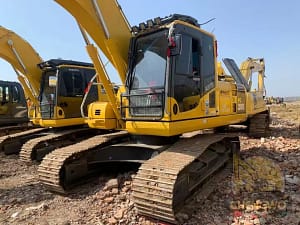
When exporting heavy machinery to nations with stringent biosecurity and environmental protection laws—such as Australia, New Zealand, Japan, the European Union, or the United States—-300x225.webp) the margin for error is zero. For dealers and exporters of used excavators and other heavy equipment, the difference between a successful sale and a devastating financial loss often comes down to something as mundane as dirt. Specifically, the old泥土 (soil) lodged deep within the undercarriage and crawler tracks of used excavators.
the margin for error is zero. For dealers and exporters of used excavators and other heavy equipment, the difference between a successful sale and a devastating financial loss often comes down to something as mundane as dirt. Specifically, the old泥土 (soil) lodged deep within the undercarriage and crawler tracks of used excavators.
Customs authorities in these high-standards countries are no longer merely scanning for rust or mechanical defects; they are deploying advanced forensic techniques to detect invasive species, prohibited seeds, and foreign pathogens. A single tablespoon of soil containing a non-native nematode or a dormant weed seed can result in a shipment being rejected, quarantined, or hit with fines that can reach tens of thousands of dollars.
This guide provides a comprehensive, step-by-step methodology for achieving “hospital-clean” standards. By adhering to these protocols, you protect your bottom line, maintain your reputation as a reliable exporter, and ensure that your used excavators and other machinery clear customs without delay.
Understanding the Risk: Why “Clean” is a Legal Mandate
Before diving into the washing techniques, it is critical to understand the regulatory landscape. Countries with isolated ecosystems are hyper-vigilant about what enters their soil. For instance, Australia’s Department of Agriculture, Fisheries and Forestry (DAFF) mandates that all imported machinery be “free from biosecurity risk material.” This includes soil, seeds, plant material, animal residues, and even spider webs.
The risk is biological. Soil from another continent can carry:
-
Khaira disease (in rice)
-
Fire ants
-
Nematodes
-
Fungal spores like Phytophthora
If a machine arrives at the port of Melbourne or Rotterdam with traces of clay in the track links, the consignee faces three options: exportation (shipment back), destruction (the machine is crushed), or expensive on-site cleaning by approved contractors. The latter can cost upwards of $5,000 to $15,000 per unit, often exceeding the profit margin on a single used excavator. For other machinery like dozers or graders with complex undercarriages, the costs are even higher.
The Anatomy of the Undercarriage: Where Soil Hides
To clean effectively, you must know where the enemy hides. The undercarriage of used excavators and other machinery is designed to trap dirt. Simply pressure washing the exterior will not suffice. The critical areas include:
-
Track Links and Bushings: The gaps between the links, known as the “box” of the track, act like a conveyor belt for dirt. As the machine moves, soil is packed into these cavities.
-
Sprocket and Idler Pockets: The sprocket teeth and the idler wheels have recesses that trap compacted clay.
-
Carrier Rollers and Bottom Rollers: The space between the roller flanges and the track frame is a primary hiding spot for mud.
-
Track Frame (C-Channel): The inside of the track frame often holds kilograms of dried mud that has fallen off the rollers over time.
-
Hard-to-Reach Areas: Behind the hydraulic cylinders, inside the counterweight recesses, and around the slew ring.
Step 1: Pre-Cleaning Assessment and Dry Removal
The most common mistake exporters make is starting with water. If you spray water on dry, compacted clay, you merely turn it into wet mud that spreads deeper into crevices. Instead, start with a mechanical, dry removal process.
Tools Required: Air compressor (minimum 175 PSI), needle scaler, putty knives, pry bars, and a heavy-duty vacuum system.
Process:
Begin by parking the used excavator on a sealed, impervious surface (concrete) to prevent recontamination. Use the needle scaler to break up large, dried chunks of clay inside the track links. For other machinery with rubber tracks, be cautious with metal tools to avoid cutting the rubber. Use compressed air to blast loose dust and debris from the sprocket pockets and around the final drive. Vacuum all removed material into sealed bins for disposal.
This stage removes approximately 70% of the mass of the soil. The goal is to reduce the volume of material that will turn into sludge during the wet cleaning phase.
Step 2: The Degreasing and Soaking Phase
Water alone cannot remove “biological glue”—the organic matter that binds soil particles. You require a combination of heated water (at least 140°F) and a high-quality, environmentally safe degreaser. However, you must check the chemical import regulations of the destination country. Some nations ban residues of certain petroleum-based degreasers.
Process:
Apply a foaming degreaser and biological soil remover to the entire undercarriage. Allow it to “dwell” for 10-15 minutes. This dwell time is crucial; it breaks the surface tension of the mud, allowing water to penetrate the compacted layers. For used excavators that have been operating in high-clay environments, you may need to rotate the tracks slightly (by starting the engine and lifting the machine with the bucket) to expose the packed soil on the top side of the tracks to the chemicals.
Step 3: High-Pressure Washing with Thermal Lance
-300x225.webp) Standard pressure washers (3,000 PSI) are often insufficient for compacted clay inside excavator undercarriages. You need a hot water pressure washer with a flow rate of at least 8 gallons per minute and a rotary (turbo) nozzle.
Standard pressure washers (3,000 PSI) are often insufficient for compacted clay inside excavator undercarriages. You need a hot water pressure washer with a flow rate of at least 8 gallons per minute and a rotary (turbo) nozzle.
Critical Technique:
-
The Lift and Spin: You must lift the machine so the tracks are off the ground. Engage the travel motor to rotate the tracks slowly while washing. This is the only way to clean the “contact” area of the track links that usually rests on the ground.
-
Angle of Attack: Direct the nozzle at a 45-degree angle into the track links. Straight-on washing often pushes dirt deeper.
-
Roller Rotation: Use a pry bar or a rubber mallet to spin the bottom rollers individually to ensure water reaches the circumference of the roller where it contacts the track chain.
For other machinery like wheel loaders, the focus shifts to wheel rims, brake lines, and articulation joints. However, for used excavators, the undercarriage is the primary focal point, often consuming 80% of the total cleaning time.
Step 4: Post-Wash Inspection and Hand Scrubbing
After the initial wash, the machine will appear clean to the naked eye. However, customs inspectors use flashlights, mirrors, and even white gloves. You must conduct a rigorous internal inspection.
The White Glove Test:
Inspect the following areas:
-
Inside the track frame: Run your hand along the inside of the C-channel. Often, a film of mud remains.
-
Behind hydraulic hoses: Mud often accumulates where hoses bundle against the frame.
-
The slew ring gear: If the used excavator has an open slew ring (the gear that allows the house to swing), this is a dirt trap.
-
Engine compartment: For other machinery and used excavators alike, check the radiator fins, battery boxes, and belly pans.
If any mud is found, it requires hand scrubbing with brushes and a steam cleaner. Steam is superior to hot water for this final pass because it vaporizes organic residues and reaches micro-crevices that liquid water cannot penetrate due to surface tension.
Step 5: Drying and Final Contaminant Removal
Wet machines attract dust. If a machine is shipped wet, it may arrive at the destination port with a layer of dust stuck to the moisture, making it look dirty. Moreover, moisture can promote mold growth during the weeks-long sea voyage, which is a biosecurity risk in itself.
Process:
Use compressed air to blow out all water from the track links, roller bearings, and electrical connectors. For used excavators with complex electronics, ensure that no water remains trapped in the main control valve or engine sensors.
Allow the machine to dry completely in a clean, enclosed environment. Once dry, use a HEPA vacuum to remove any residual dust or dead insects that may have landed on the machine after washing.
Documentation: The “Clean Certificate” Evidence
Physical cleanliness is only half the battle. The other half is proving it. Customs brokers in high-risk countries require documentary evidence that the cleaning was performed to standard.
You must create a “Biosecurity Cleaning Declaration” that includes:
-
Photographs: Timestamped photos of the machine during cleaning, specifically showing the undercarriage, tracks, and interior compartments before and after.
-
Serial Numbers: The VIN or equipment serial number clearly visible in the photos.
-
Chemicals Used: Safety Data Sheets (SDS) of the degreasers and sanitizers used, proving they are free from prohibited substances.
-
Methodology Statement: A brief description of the cleaning process (dry removal, chemical application, hot water pressure wash, inspection).
-
Certification: A signature from the cleaning supervisor stating the machine is free of soil, plant material, and animal residues.
For high-value used excavators destined for Australia or New Zealand, consider hiring a third-party accredited certifier to supervise and stamp the cleaning process. The cost of the certifier (usually $200-$500) is negligible compared to the risk of a $50,000 quarantine fine.
Case Study: The Cost of a Single Seed
To underscore the importance of this process, consider the reality of port inspections. In 2023, a shipment of other machinery—specifically, a used wheel loader—arrived in Brisbane, Australia. The machine appeared visually clean. However, a quarantine officer used a flashlight to inspect the recesses of the articulation joint and found a single Avena fatua (wild oat) seed lodged in a grease seam.
The result: The machine was held for 14 days. The cleaning contractor charged $8,900 AUD for disassembly and high-temperature steam cleaning. The importer also incurred $4,500 AUD in demurrage fees (port storage). The total fine and remediation cost exceeded the value of the machine.
For used excavators, which have far more complex undercarriages than wheel loaders, the risk is even higher.
Special Considerations for Different Machinery Types
While this guide focuses heavily on used excavators, it is essential to tailor the approach for other machinery in your inventory.
Rubber-Tracked Excavators and Compact Track Loaders
Rubber tracks are porous. Do not use petroleum-based degreasers, as they degrade the rubber compound. Instead, use citrus-based degreasers. Be extremely careful with high-pressure water directed at the track edges, as it can delaminate the rubber from the steel cords.
Wheel Loaders and Graders
For other machinery with tires, the focus shifts to tire treads and wheel wells. Mud packed into deep tire treads is a primary hiding spot for seeds. Additionally, articulation joints (the pivot point between the front and rear frames) often have “dirt pockets” that require specialized brushes to clean.
Dozers and Large Crawlers
For large used excavators and dozers with sealed and lubricated track (SALT), you must avoid damaging the track seals. Do not direct high-pressure water directly at the track pin seals. Instead, focus on the link faces and roller flanges.
Post-Cleaning Storage and Logistics
After the cleaning process is complete, the machine must be stored on a clean, sealed surface. Storing a cleaned used excavator on a dirt lot defeats the purpose; you will recontaminate the undercarriage before it even reaches the container or flat rack.
Container Packing:
When loading used excavators into high cubes or onto flat racks, ensure the loading area is swept clean. If you must drive the machine onto a trailer to move it to port, drive it over plastic sheeting or a clean concrete ramp. Many exporters are now using disposable “booties” (large plastic bags) to wrap the tracks after cleaning to ensure no debris is picked up during transport to the wharf.
The Role of Technology in Cleaning Verification
To meet the SEO standards and the demands of modern customs regimes, integrating technology into your cleaning protocol can serve as a marketing advantage. Using thermal imaging cameras to verify that water has evaporated from all crevices, or using UV dyes in the cleaning solution to prove coverage, can set your inventory apart.
For high-risk shipments, some companies now provide a 360-degree walkaround video of the used excavator post-cleaning, with a close-up of the serial number and the undercarriage. This video, uploaded to a cloud server and linked to the Bill of Lading, provides undeniable proof to customs brokers that the unit was compliant at the time of export.
Conclusion: Cleanliness is a Competitive Advantage
In the global market for heavy equipment, the distinction between a premium supplier and a high-risk supplier is often defined by compliance. Exporters who treat the cleaning of used excavators and other machinery as a casual step—rather than a critical compliance procedure—are gambling with their business licenses.
By implementing a rigorous protocol that includes dry removal, chemical soaking, high-pressure thermal washing, meticulous hand scrubbing, thorough drying, and comprehensive documentation, you do more than just avoid fines. You build trust with international buyers who are weary of the headaches associated with port holds.
Remember, the customs officer inspecting your machine at the port of entry does not care about the engine hours or the hydraulic performance; they care about the single grain of soil that could threaten their nation’s agricultural economy. In their eyes, a used excavator with clean tracks is a professional operation; one with mud is a liability.
As environmental regulations tighten globally—with the EU recently introducing stricter Soil Health Laws and New Zealand enforcing its strictest-ever biosecurity import standards—the demand for “import-ready” machinery will only increase. By mastering the art of the deep clean, you position your inventory as the premium, hassle-free option in a crowded market.
Ensure your team is trained on these protocols, invest in the right equipment (hot water pressure washers, steamers, and needle scalers), and always, always document the process. The cost of cleaning is an investment in risk mitigation. The cost of failing to clean is the potential loss of your business, one shipment at a time.