


.webp)
1. The Ageing Fleet Reality
Across countless job sites, the average age of heavy equipment continues to rise. Many operators climb into cabs manufactured before the iPhone existed. The economic case for keeping used excavators and other machinery running for two decades is clear: capital costs are long amortized, and spare parts remain available from aftermarket suppliers. However, the safety case is less straightforward. A twenty-year-old excavator does not behave like a modern unit with electronic stability control, load moment indicators with audible alarms, or emergency lowering systems that activate automatically. When a hydraulic line bursts on a 2004 excavator, the response required from the operator is radically different from what newer machines demand. This gap between old iron and modern safety expectations creates what safety professionals call the “emergency bail-out” scenario: the split-second decision an operator makes when primary systems fail. Writing effective training for these situations requires revisiting fundamentals that many current certification programs skip.
The construction industry has a peculiar relationship with aged equipment. While commercial aviation grounds planes after a set number of cycles, no federal mandate forces a construction firm to retire a used excavator at twenty years. As a result, machines accumulate hours while their safety systems degrade unevenly. A previous owner might have replaced the swing bearing but ignored the accumulation of micro-fractures in the boom. Another owner might have upgraded the seatbelt but left the original 1990s hydraulic hoses in place. Each excavator becomes a unique collection of original components, field repairs, and aftermarket modifications. This variability means that generic safety training fails. Operators cannot memorize a single emergency procedure for hydraulic failure because the actual behavior of a twenty-year-old machine depends on which components have been replaced and which have been patched.
Regulatory bodies such as OSHA in the United States do not exempt older equipment from their requirements. The same standards for rollover protection, falling object protection, and operator visibility apply to a machine built in 2004 as to one delivered last month. However, the original manufacturer’s instructions for emergency procedures may assume a machine with fully functional pilot pressure accumulators or a cab that has not sagged on its mounts. Here lies the core problem: training materials for used excavators and other machinery are often written for new equipment, and operators are left to translate those instructions into effective actions on degraded systems. This article builds a framework for safety training specifically designed for twenty-year-old machines, addressing mechanical realities rather than manufacturer ideals.
2. Why Twenty Years Changes Everything
A machine built in 2004 or 2005 belongs to a specific technological era. Tier 3 emissions engines predominated, hydraulic systems relied on pilot controls rather than electronic joysticks with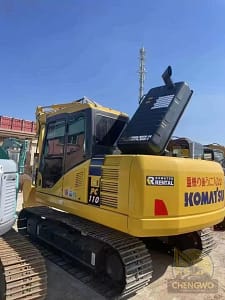 haptic feedback, and rollover protection structures met older deformation standards. Time has not been neutral to these components. Twenty years of thermal cycling, vibration, and operational stress alter materials at the molecular level. Hydraulic hoses that passed pressure tests at manufacture now contain microscopic cracks in their inner liners. Steel in the excavator’s boom and arm has undergone millions of fatigue cycles, each one advancing micro-cracks that a visual inspection may miss. Wires in the cab’s wiring harness have oxidized, creating intermittent connections that can make emergency systems unreliable precisely when they are needed.
Understanding these changes matters for training because it changes what an operator should expect during an emergency. On a new excavator, if the operator releases the joysticks, the hydraulic system will typically return to a neutral state within milliseconds. On a twenty-year-old excavator, spool valves may stick due to contaminated hydraulic oil that has been changed irregularly. The result is a machine that continues moving after the operator has commanded a stop. Training must address this possibility explicitly. Operators need to know that on aged equipment, the assumption of immediate response to control inputs is false. The “emergency bail-out” therefore includes not only reacting to the immediate failure—a burst hose, a stuck throttle, a falling boom—but also recognizing that the machine’s baseline behavior has changed.
The types of failures common on two-decade-old equipment differ from failure modes on new machines. Electronics are less common on used excavators from the early 2000s, which means fewer software glitches but more purely mechanical failures. A new excavator may suffer from a faulty sensor that triggers a safe shutdown mode. An old excavator suffers from a cracked hydraulic fitting that sprays oil at high pressure onto hot engine components. One hazard requires navigating a touchscreen menu to override a soft lockout. The other requires immediate evacuation before a fire starts. Training curricula that do not distinguish between these scenarios waste time on low-probability events while ignoring high-probability dangers specific to ageing fleets.
Furthermore, twenty years is sufficient time for multiple ownership changes. A used excavator that began its life on a highway project in California may have spent its second decade on a demolition site in Texas and its third year in a logging operation in Oregon. Each application stresses different components. The training an operator receives at their current employer may describe a machine whose configuration no longer matches reality. For example, a previous owner may have installed a dedicated hydraulic circuit for a thumb attachment but disconnected the safety interlocks that originally prevented boom movement while the thumb was actuated. The current operator, trained on the assumption that factory interlocks exist, might place their hand in a pinch point during an emergency, believing the machine will prevent injury. Safety training for aged equipment must therefore treat each machine as an individual case rather than relying on OEM specifications.
3. Common Failure Modes on Aged Excavators
To write effective training, we must identify the specific failure modes that emerge after twenty years of service on used excavators and other machinery grouped in the same age cohort. These are not theoretical risks but documented outcomes from equipment inspections and accident reports. The most dangerous category involves hydraulic system failures. Original hoses become brittle. The rubber compound hardens, and the steel braiding inside corrodes from moisture ingress over countless condensation cycles. When a hose bursts, the excavator behaves unpredictably. The sudden loss of hydraulic fluid in one circuit can cause an opposite cylinder to extend or retract without warning because of pressure differentials between circuits. An operator bailing out of a cab during such an event must first ensure that the machine will not roll or swing into them.
The second major category involves structural fatigue. Cracks in the excavator’s boom, arm, or bucket linkage develop slowly. An operator may notice them only when a routine digging cycle suddenly produces a loud crack and the boom droops. The emergency procedure here differs from a hydraulic failure because the structural member may fail completely within seconds. The “bail-out” in this case means stopping all movement, lowering the bucket to the ground if possible, and exiting the cab before the boom separates. Training must teach operators how to distinguish between hydraulic drift—slow, continuous motion—and structural settling—sudden, stepwise movement accompanied by metallic noises.
Other machinery types in the same age category share analogous failure patterns. Aged wheel loaders experience steering linkage wear that introduces play, making emergency steering unpredictable. Older dozers suffer from undercarriage wear that increases the probability of track derailment during a sharp turn under load. Motor graders from the early 2000s have hydraulic control valves that develop internal leakage, causing the blade to drift without joystick input. The common thread across all these machine types is that the operator cannot rely on factory-stated response times, holding pressures, or failure containment features. The twenty-year-old machine has degraded in ways that turn moderate failures into emergencies.
Electrical system failures on used excavators from this era present a distinct training challenge. The wiring harnesses use connectors that were not designed for two decades of vibration and moisture. Intermittent connections cause warning lights to illuminate and extinguish without pattern. An operator accustomed to ignoring a flickering “hydraulic oil temperature” lamp may be unprepared when a genuine over-temperature event occurs. Worse, emergency stop circuits may have been bypassed by previous owners to keep the machine running when a safety switch failed. Training must include a pre-operation checklist that verifies emergency stops, neutral start switches, and backup alarms. The checklist becomes part of the daily bail-out preparation: knowing the machine’s safety systems are functional before an emergency occurs.
4. Gaps in Existing Training Programs
Most operator certification programs assume relatively new equipment. The National Commission for the Certification of Crane Operators (NCCCO) excavator certification tests operators on knowledge of load charts, hand signals, and basic machine controls. However, the test does not cover what to do when the pilot pressure accumulator—which stores hydraulic energy for emergency boom lowering—has lost its nitrogen charge because a service technician skipped that maintenance step for the last five years. Similarly, OSHA’s Subpart P for excavations requires competent person oversight but does not specify training content for operators of ageing used excavators. The result is a gap between regulatory compliance and practical safety.
Equipment dealers offering training typically focus on new machines they sell. A dealer training course for excavator operators will emphasize the features of the current model line, including automatic engine shutdown when overheating, hydraulic oil temperature management systems, and emergency descent systems that work with the push of a button. These features simply do not exist on a twenty-year-old machine. An operator who completes such a course and then climbs into an older excavator may attempt to use emergency procedures that the machine cannot execute. For example, modern excavators have electric-over-hydraulic controls that default to a safe state when power is lost. On a twenty-year-old machine with fully hydraulic pilot controls, loss of the pilot pump means all controls become extremely heavy, and the machine may drift because pilot pressure holds spool valves in position. The trained emergency response is completely different.
Internal training programs at construction firms also suffer from recency bias. When a company buys a new used excavator—contradictory as that phrase seems—the training material often comes from the previous owner. That material might be a decade old and reference a machine configuration that no longer exists. One construction safety manager admitted in an interview that his firm’s training video for hydraulic failure showed an operator using an electric joystick to initiate an emergency boom descent, but their fleet’s used excavators had mechanical levers connected to the main control valves by linkages and cables. The video was worse than useless because it gave operators a false sense of preparedness. Effective training for aged equipment must be written specifically for that equipment, not adapted from newer materials.
Another critical gap is the absence of scenario-based training for multi-failure emergencies. New equipment typically experiences a single failure at a time because redundant circuits and electronic monitoring catch secondary issues quickly. On a twenty-year-old machine, the failure of one component can cascade. A hydraulic hose bursts, spraying oil onto the excavator’s turbocharger. The oil ignites. The operator reaches for the fire suppression system, only to find that the previous owner removed it to make space for a cooler bypass. The operator then attempts to exit the cab, but the door hinge has sagged from years of vibration and now sticks when opened beyond 45 degrees. Training that only covers “what to do when a hose bursts” does not prepare operators for the simultaneous presence of multiple degraded systems. The bail-out procedure must assume that everything the operator touches might fail.
5. Designing the “Emergency Bail-Out” Curriculum
An effective safety training curriculum for twenty-year-old used excavators and other machinery must begin with a philosophy shift: assume that every safety system has been compromised unless proven otherwise. This sounds extreme, but it aligns with actual inspection findings on aged equipment. A training module built on this philosophy contains four major sections: pre-operational verification, normal operation risk awareness, emergency procedure practice, and post-emergency protocols. Each section uses concrete, machine-specific actions rather than general principles.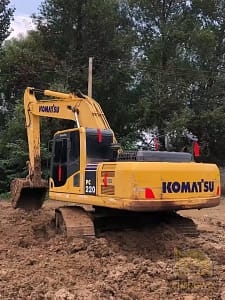
Module 1: Verification Before Operation – The operator must verify three categories of components before moving the machine. First, emergency systems: test the emergency stop button to confirm it kills the engine and dumps hydraulic pressure. Second, structural integrity: inspect the excavator boom, arm, and bucket linkage for visible cracks, paying particular attention to weld joints and previous repair marks. Third, fluid systems: check hydraulic hoses for bulges, cracks, or oil weeping at fittings. The training emphasizes that a failed verification requires locking out the machine and reporting it; no “bail-out” procedure can compensate for a missing emergency stop.
Module 2: Risk-Aware Normal Operation – During normal digging, loading, or grading, operators of aged equipment must maintain a higher level of vigilance regarding machine behavior. The training teaches operators to distinguish between acceptable wear and warning signs. For an excavator, acceptable wear includes slow boom drift over several minutes—indicative of worn cylinder seals. Warning signs include sudden droop or jerkiness, which suggest valve failure or aeration of hydraulic fluid. For other machinery like wheel loaders, acceptable wear includes steering play under about 10 degrees; warning signs include a steering wheel that rotates without any wheel movement, indicating complete loss of connection. Operators learn to shut down the machine immediately upon observing a warning sign, not to complete the shift.
Module 3: Emergency Procedure Practice – This module uses low-pressure simulations and verbal drills. For used excavators, the key emergencies covered are (a) hydraulic line burst, (b) boom structural crack propagation, (c) swing brake failure, and (d) engine runaway due to turbocharger seal failure. Each scenario has a specific “bail-out” flowchart. For a hydraulic burst, the sequence is: do not move joysticks (movement can worsen pressure imbalance), hit the emergency stop, lower the boom by opening the lowering valve if equipped and functional, and exit immediately if smoke appears. For swing brake failure on a slope, the sequence is: use the boom and arm to brace the excavator against the ground, engage the parking brake manually even if the indicator light doesn’t illuminate, and exit uphill of the machine. These procedures are practiced verbally and with a checklist until operators can recite them without hesitation.
Module 4: Post-Emergency Protocols – After any emergency that requires a bail-out, the operator must not restart the machine without a full inspection. The training covers how to tag out the machine, whom to notify, and what information to document. This module also addresses psychological responses: the tendency to minimize the event and resume work. Operators learn that on aged equipment, a near-miss today is a predictor of a failure tomorrow because the conditions that caused the emergency have not resolved themselves. The post-emergency protocol includes mandatory reporting and a requirement that a competent person inspect the machine before returning it to service.
The entire curriculum should be delivered in sessions lasting no more than four hours, with frequent opportunities for questions. Written tests confirm retention of the flowcharts, and a practical demonstration—using a non-operational used excavator as a prop—verifies that operators can locate emergency stops, lowering valves, and fire extinguishers without searching. The training must be refreshed every twelve months because operators forget procedures, and equipment conditions change.
6. Integrating Machine-Specific Checklists
No single checklist works for all used excavators because the features present on a 2004 Caterpillar 320C differ from a 2005 Komatsu PC200-7. However, the structure of the checklist should be universal. Each checklist focuses on verification items, not on operational instructions. For example, a typical checklist used in conjunction with this training includes line items such as:
-
Emergency stop button: engine stops when pressed
-
Neutral start switch: engine only cranks in neutral
-
Boom lowering device (if equipped): valve moves freely
-
Horn and backup alarm: audible from cab
-
Seatbelt: webbing intact, buckle secure, mounting points solid
-
Hydraulic hoses: no cracks, bulges, or leaks at any visible section
-
Cab door: opens fully and closes without binding
-
Fire extinguisher: gauge in green, pin in place
This checklist takes about five minutes to complete. The training emphasizes that skipping any item is equivalent to accepting that safety system as non-functional. For other machinery types, analogous items replace the excavator-specific checks. A wheel loader checklist includes steering linkage pin condition and brake pedal free play. A dozer checklist includes final drive case temperature and track tension. The principle is the same: verify before operating.
The training also teaches operators how to modify the checklist when a component fails the verification. For a used excavator with a non-functional boom lowering device, the operator must not operate on slopes or in any position where engine failure could trap them. The checklist becomes a dynamic tool for defining safe operating boundaries rather than a static document. This flexibility is essential for aged equipment because repairs may be delayed due to parts availability. Telling an operator to simply not use the machine may be unrealistic, but telling them to avoid specific risky operations while the repair is pending is both realistic and safer than operating with no restrictions.
7. Addressing Hydraulic and Structural Priority
When training operators for the “emergency bail-out,” two systems demand disproportionate attention because their failure is most likely to cause fatal injury: hydraulics and structures. Hydraulic failures on used excavators and other machinery create high-pressure oil jets that can penetrate skin (injection injuries) and also cause sudden, uncontrolled machine movement. Structural failures lead to collapse of the lifting or digging apparatus, crushing the cab or anyone nearby. The training dedicates separate deep-dive sessions to each.
Hydraulic failures – The training teaches operators three physical principles. First, oil is nearly incompressible; a burst in one line does not mean the cylinder immediately drops. Instead, the cylinder may remain extended because the piston seals still hold the oil in place. However, the pressure differential created by the burst can cause the machine to drift unpredictably. Second, hydraulic accumulators retain energy even after the engine stops. On many twenty-year-old excavators, the pilot accumulator can cycle the main control valves multiple times after shutdown. Operators learn to treat any recently stopped machine as still having hydraulic energy. Third, small leaks precede large bursts. Operators learn to recognize weeps and seeps as warnings, not nuisance issues.
Structural failures – Steel fatigue is cumulative and invisible until a crack reaches critical length. The training covers the concept of stress cycles: each time the excavator lifts a load or digs into hard material, a stress cycle occurs. After millions of cycles, a crack initiates at a stress concentration point—a weld, a drilled hole, a corrosion pit. The crack grows slowly at first, then rapidly. Operators learn to inspect high-stress areas using a simple rule: look for rust lines on painted surfaces (cracks allow moisture ingress behind the paint), listen for creaking during cycling (indicates crack faces rubbing), and feel for small steps where cracks have opened. Upon detecting a crack, the operator must not use the machine until a qualified inspector evaluates it. The emergency bail-out for a structural failure during operation is to immediately lower all loads to the ground, shut off the engine, and exit the cab. Any continued movement risks catastrophic separation.
8. Legal and Documentation Aspects
Safety training for operators of twenty-year-old equipment must address the legal reality that courts and regulators will scrutinize the training provided. In the event of an accident involving used excavators or other machinery, a plaintiff’s expert will ask: Did the training account for the equipment’s age? Did the training include verification of degraded components? Was the training documented? This last point—documentation—receives particular emphasis in the curriculum design. Every operator who completes the training must sign a statement that they understand the limitations of twenty-year-old equipment and have been instructed in the specific emergency procedures for the machines they operate.
Documentation serves another purpose: it creates a record that can protect the employer from allegations of inadequate training. A well-designed training record includes the machine’s serial number, the operator’s name, the date, the specific modules completed, and a verification that the operator demonstrated the ability to locate emergency equipment on the actual machine. Without this documentation, a verbal safety meeting has little evidentiary weight. The training curriculum therefore includes templates for sign-off sheets and practical demonstration checklists.
Furthermore, the training addresses the operator’s responsibility to report unsafe conditions. Some operators of used excavators hesitate to report issues because they fear being assigned to a worse machine or losing hours. The training explicitly states that reporting a safety issue is a condition of continued employment—not a discretionary choice. This statement, when documented, supports a safety culture and limits liability if an operator fails to report a known issue. The legal module also informs operators of their right to refuse unsafe work under OSHA Section 11(c) and similar laws in other jurisdictions, but it frames this right as a last resort after internal reporting fails.
9. Trainer Qualifications and Delivery Methods
The effectiveness of any safety training hinges on the trainer’s credibility. For training on twenty-year-old used excavators and other machinery, the ideal trainer has both operational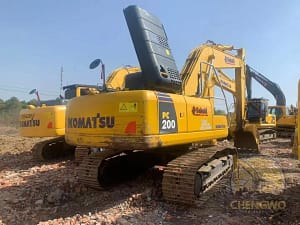 experience on aged equipment and formal safety credentials. A trainer who has only operated new machines, or only written safety programs without fieldwork, will lack the specific knowledge to answer questions like: “How much boom drift is acceptable before I should shut down my 2004 excavator?” The answer depends on the machine’s specific cylinder bypass rate and the working environment. A credible trainer can provide a rule of thumb (e.g., drift exceeding one foot per minute with the engine off) and explain how to measure it.
Delivery methods should prioritize hands-on demonstration. Classroom lectures alone are insufficient for emergency procedures that rely on muscle memory and spatial awareness. The training curriculum requires that each operator spend at least thirty minutes on a non-operating used excavator (or a dedicated training mockup) locating emergency stops, testing boom lowering valves, and practicing exit routes. This practical session can be conducted on a machine that is tagged out for maintenance, provided that the hydraulic pressure has been fully dumped and the engine cannot start. Safety during training itself must be explicit; no live hydraulic or engine systems are used during emergency drills to prevent accidental activation.
For fleets with multiple types of other machinery, the training must be segmented by machine category. An operator who normally runs a used excavator but occasionally operates a twenty-year-old wheel loader needs separate bail-out training for the loader. The hydraulic layout, emergency stop locations, and structural failure modes differ significantly. A single training session covering “general heavy equipment safety” does not meet the standard for aged equipment. The recommended approach is modular training: a common core covering the philosophy of ageing equipment, followed by machine-specific modules. Operators receive certification for each machine type they are authorized to operate, and cross-training requires completing the relevant module.
Refresher training is mandated at intervals not exceeding one year. Additionally, any time a machine undergoes major repair—replacement of a boom, rewiring of the cab, rebuilding of the hydraulic system—the operators assigned to that machine must complete a focused refresher on the component changed. This ensures that the operator’s mental model of the machine stays accurate. The refresher can be as short as fifteen minutes, but it must be documented. For used excavators that are rare models (e.g., only three units in the regional fleet), the trainer may need to develop custom materials referencing the specific service manual.
10. Conclusion: The Bail-Out Mindset
Safety training for operators of twenty-year-old used excavators and other machinery is not about memorizing a set of generic rules. It is about adopting a mindset: the machine will not help you survive an emergency. The excavator’s emergency stop may be corroded. The boom lowering valve may be seized. The seatbelt buckle may release at the worst possible moment. The trained operator accepts these possibilities and prepares for them through verification, vigilance, and rehearsed responses. The “emergency bail-out” is not a panic reaction but a disciplined sequence of actions that the operator has practiced until automatic.
The economic pressures that keep aged equipment in service are not going away. New excavator prices have increased faster than construction contract rates, and many firms cannot justify replacing a functional twenty-year-old machine. What they can justify is investing in training specifically tailored to those machines. A training program built on the principles outlined here—machine-specific checklists, scenario-based emergency drills, documentation of degraded features, and regular refreshers—reduces the risk premium associated with aged equipment. Operators gain confidence because they know what to do when the machine behaves unpredictably. Safety managers gain defensible records of training. And the firm maintains a productive fleet without sacrificing the well-being of the people who operate it.
Finally, this training framework contributes to the broader industry effort to preserve tribal knowledge. The generation of operators who learned on machines without electronic aids is retiring. The incoming generation has grown up with touchscreens, backup cameras, and automatic shutdowns. Without explicit training for aged equipment, young operators assume that twenty-year-old used excavators have the same safety margins as modern machines. That assumption kills. By implementing the training described here, a construction firm ensures that the lessons of the pre-electronics era are not lost but instead translated into practical, repeatable procedures. The emergency bail-out becomes a skill, not a gamble.