


.webp)
The undercarriage of a crawler excavator is arguably the single most expensive system to maintain and replace on the entire machine. Industry data indicates that undercarriage componentsaccount for up to 50% of a tracked machine’s lifetime owning and operating costs. For buyers of used excavators, the condition of the track system is often the difference between a profitable acquisition and a financial liability. Yet many prospective buyers and equipment managers assume that accurately assessing undercarriage life requires extensive disassembly—pulling pins, removing track chains, and dismantling rollers. This assumption is incorrect. A thorough, reliable assessment of used crawler excavator undercarriage life can be performed entirely without disassembly, using systematic visual inspection and precise measurements with basic hand tools. This article presents a comprehensive methodology for evaluating the remaining service life of every major undercarriage component on used excavators, from sprockets and idlers to track chains, rollers, and shoes—all without taking the machine apart.
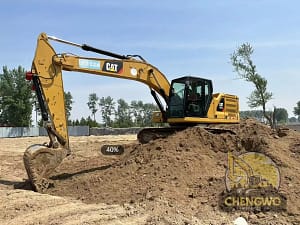
1. Why Undercarriage Assessment Matters for Used Excavators
Before examining specific inspection techniques, it is essential to understand why the undercarriage demands such careful attention when evaluating used excavators. The track system supports the entire weight of the machine, transfers power from the drive motor to the ground, and absorbs tremendous forces during digging, traveling, and swinging operations. Unlike engine or hydraulic components, which can often be repaired or rebuilt at reasonable cost, undercarriage replacement is a major capital expense. A full set of tracks, rollers, idlers, and sprockets for a medium-sized excavator can cost tens of thousands of dollars. When purchasing used excavators, the undercarriage typically drives replacement costs. Uneven wear or thin rails can make an otherwise good machine uneconomical.
Furthermore, the condition of the undercarriage directly influences machine performance and operating costs. Components in poor condition increase fuel consumption, shorten the machine’s service life, and elevate the risk of unplanned downtime. A worn track chain that no longer fits the sprocket teeth properly will cause the chain to ride up on the tooth tips, accelerating sprocket wear and reducing traction efficiency. Worn rollers increase rolling resistance and place higher loads on bearings and bushings. These cascading effects mean that a seemingly minor undercarriage issue can rapidly escalate into a much larger and more expensive problem.
For these reasons, a disciplined, non-disassembly undercarriage inspection is an indispensable part of any used excavator evaluation. The goal is not merely to identify obvious damage but to quantify wear, estimate remaining life, and forecast when replacement will be necessary.
2. Essential Tools for Non-Disassembly Undercarriage Inspection
Accurate undercarriage measurement requires the right tools. Eyeballing wear leads to either premature replacement (wasted money) or catastrophic cascade wear (much more wasted money). The following tools constitute a basic inspection kit that can be carried to any equipment yard or auction:
-
Track measuring group – This dealer-standard kit, costing approximately $250, measures grouser height, rail height, link height, roller and idler tread diameter, and bushing diameter. It is the single most useful tool for a complete inspection.
-
Outside caliper or wear gauge – Used for precise diameter and thickness measurements on rollers, idlers, and shoe bases, comparing against OEM new and end-of-life specifications.
-
Depth gauge – Measures grouser height and tread depth from center, reading how much wear material remains versus the original profile.
-
Tape measure – Used for pitch elongation measurement across a span of pins, the most accurate field method for detecting pin and bushing wear in the track chain.
-
Straightedge or string line – For track tension (sag) measurement, stretched from sprocket to idler over the grouser tips.
-
Flashlight and inspection mirror – For examining hard-to-see areas such as seal faces, roller flanges, and the underside of track shoes.
-
OEM specification sheet – Having the machine’s wear-limit chart on hand is essential to convert measurements to percentage wear.
With these tools and the manufacturer’s service manual specifications, a comprehensive undercarriage assessment can be completed in approximately 30 to 45 minutes per machine.
3. Systematic Inspection Sequence
The inspection should follow a logical sequence, working through each major component group systematically. Park the used excavator on level, firm ground with the bucket grounded. Clean the undercarriage thoroughly before inspection, as packed dirt and debris can obscure wear patterns and interfere with accurate measurements.
3.1 Track Chain and Pitch Measurement
The track chain—comprising links, pins, and bushings—is the foundation of the entire undercarriage system. Track chain wear is primarily caused by internal wear between pins and bushings,-300x225.webp) which gradually increases the pitch length. As the pins rotate inside the bushings for thousands of hours, the steel wears away, making the pins smaller and the holes oval. This causes the track chain to physically stretch.
which gradually increases the pitch length. As the pins rotate inside the bushings for thousands of hours, the steel wears away, making the pins smaller and the holes oval. This causes the track chain to physically stretch.
To measure pitch elongation without disassembly, take a tape measure or specialized chain wear gauge and lay it along the bottom of the track. Measure the distance across a span of pins—typically 10 pins or “pitch holes”. Compare this measurement to the brand-new specification found in the service manual. If a 10-pitch measurement exceeds the service limit, usually 2-3% over new specifications, the track is effectively worn out regardless of how the tread shoes look. In most cases, when track chain elongation reaches around 3%, replacement should be considered.
Track link height is another critical measurement. Using a depth gauge or caliper, measure the height of the link from the rail surface. For medium excavators, a minimum of 75mm is typical, and replacement is indicated if the measurement falls below this threshold. Link height wear indicates the extent to which the track chain has been worn down by the rollers riding on the rail surface.
3.2 Sprocket Assessment
The drive sprocket transmits power from the final drive motor to the track chain. Sprocket teeth wear on the drive face, and as they wear, the tooth profile changes from a rounded, symmetrical shape to a sharp, hooked point. A pointed or hooked tooth is the classic visual sign of a worn sprocket.
To assess sprocket condition without disassembly, clean packed material from between the teeth with a track spade. Use a sprocket wear gauge, often part of the track measuring group, laid against the tooth profile. Compare the tooth shape to the OEM profile template—wear shows as a gap between the gauge and the worn drive face. Inspect for sharp or hooked tips, which are the unmistakable sign of replacement-level wear.
Sprocket tooth wear becomes dangerous to track links when pitch elongation exceeds 3%, typically marked by pointed teeth, bushing gouges, and chain skipping. When inspecting used excavators, pay particular attention to the relationship between sprocket teeth and the track chain—if the chain no longer fits snugly between the teeth, both components are nearing the end of their service life.
3.3 Roller Inspection
Track rollers (bottom rollers) and carrier rollers (top rollers) support the weight of the machine and maintain track alignment. Without disassembly, rollers can be assessed through visual inspection and rotation checks.
Inspect each roller for oil leaks around the seals, which indicate seal failure and imminent bearing failure. Check for worn-down flanges, which occur when the track chain has been running off-center. Rotate each roller by hand where accessible—smooth rotation indicates good bearing condition, while rough or seized rotation signals bearing failure.
Carrier rollers maintain track tension and prevent the track from sagging excessively at the top of the track frame. If the carrier roller is seizing, it can cause the track to bind at the top, leading to increased track tension and accelerated wear on the track shoes and rollers. Check the wear level of each carrier roller; if significantly worn, it may not effectively maintain track tension.
3.4 Idler Assessment
The idler is located at the front of the track frame and guides the track chain as it returns from the ground. Like rollers, idlers can be assessed without disassembly through visual inspection and rotation checks.
Inspect the idler for cracks, seal leaks, and worn-down tread surfaces. Check the idler’s rotation to ensure it moves smoothly without any binding. Smooth rotation of the idler is crucial for maintaining track stability during operation. Excessive idler wear can lead to track misalignment, compromising overall safety and accelerating wear on other components.
Measure the idler tread diameter at the most worn area using a caliper or depth gauge. Compare the measurement to OEM specifications to determine the percentage of wear and estimate remaining life.
3.5 Track Shoe and Grouser Inspection
Track shoes provide traction and protect the underlying track chain. The grouser bar—the raised portion of the shoe—absorbs most of the wear, and its condition can indicate when a track needs replacement or overhaul.
To measure grouser height without disassembly, use a depth gauge placed on the bottom of the rail with the pin passing directly through the center of the bushing to meet the undersurface of the shoe. The measurement should be taken at least a third of the way across the grouser bar, as the ends often become rounded. Compare the measurement to the new specification from the service manual to determine the percentage of wear.
Inspect track shoes for cracks, missing chunks, deep gouges, or bent shoes. While these issues do not necessarily indicate the end of undercarriage life, they do signal that the machine has operated in severe conditions and may have experienced accelerated wear on other components.
3.6 Track Tension Evaluation
Track tension is the most controllable wear factor. Incorrect tension—whether too loose or too tight—accelerates wear on virtually every undercarriage component. Too much tension increases rolling resistance and places higher loads on the bearings and bushings of the rollers and idlers, accelerating wear and raising fuel consumption. A loose track can derail, while an overly tight track can cause excessive wear on the components.
To check track tension without disassembly, measure the track sag—the amount the track droops between the idler and the first carrier roller. Most manufacturers recommend a sag of 25-35mm for standard excavator applications. Use a straightedge or string line stretched from the sprocket to the idler over the grouser tips, then measure the maximum deflection. Compare the measurement to the manufacturer’s specification.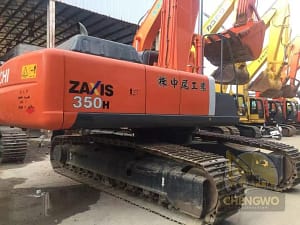
4. Advanced Non-Disassembly Assessment Techniques
Beyond basic visual inspection and manual measurements, several advanced techniques can provide deeper insight into undercarriage condition without disassembly.
4.1 Ultrasonic Thickness Measurement
Ultrasonic thickness gauges can measure the remaining wall thickness of bushings, rollers, and other components without any disassembly. This technology, used by manufacturers such as Komatsu in their undercarriage inspection programs, provides a precise picture of the state of the undercarriage and removes guesswork from machinery investment decisions. The ultrasonic tool can access hard-to-reach measurement areas and store precise thickness data for trend analysis over time.
4.2 Wear Trend Analysis
A single measurement shows only the status quo of undercarriage wear; regular measurements provide a wear trend. For used excavators with available service records, reviewing historical wear measurements can reveal whether wear has been accelerating, indicating potential issues such as operator abuse or operating in abrasive conditions. Komatsu recommends scheduling undercarriage inspections at least every six months—and even more frequently in demanding or high-utilization sites.
4.3 Operational Observation
Observing the used excavator in operation provides valuable clues about undercarriage condition. Listen for unusual noises during travel—grinding, popping, or squealing sounds often indicate worn sprockets, seized rollers, or track chain issues. Observe track behavior during turning—excessive resistance or jerky movement may signal binding in the track system. Check for track sag during operation—excessive sag indicates either incorrect tension or an elongated track chain.
5. Interpreting Inspection Results and Estimating Remaining Life
Once all measurements are collected, the data must be interpreted to estimate remaining undercarriage life. The following wear limits serve as general guidelines:
| Component | Wear Limit | Reference |
|---|---|---|
| Track chain pitch elongation | 3% over new | Replace when exceeds 3% |
| Sprocket teeth | 25% wear | Replace at 25% wear |
| Track shoes | 50% reduction | Replace at 50% reduction from new height |
When evaluating used excavators, remember that undercarriage components wear as a system. Replacing individual components rather than the entire system often results in excessive wear of the new component. If the track chain is elongated beyond service limits, the sprocket will wear rapidly regardless of its current condition. If rollers are worn, they will accelerate wear on the track chain rails. A holistic assessment that considers the condition of all components together is essential for accurate life prediction.
6. Red Flags That Indicate Imminent Undercarriage Replacement
Certain observations during a non-disassembly inspection should raise immediate concerns about the remaining life of used excavator undercarriages: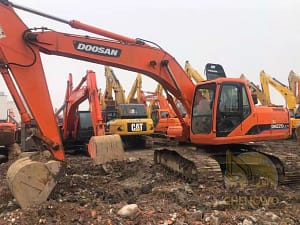
-
Hooked or pointed sprocket teeth – This indicates that the sprocket is at or beyond its wear limit and requires replacement.
-
Pitch elongation exceeding 3% – The track chain is worn out and must be replaced as a whole.
-
Multiple oil leaks from rollers or idlers – Seal failure indicates that bearings are contaminated and failure is imminent.
-
Visible cracks in track links or shoes – Structural failure is a safety hazard and requires immediate replacement.
-
Uneven wear patterns – Uneven wear across components indicates misalignment, which will accelerate wear on all components.
-
Chain skipping on sprocket – The track chain no longer fits the sprocket properly, indicating that both components are beyond serviceable limits.
7. The Role of Service History in Undercarriage Life Assessment
While physical inspection is paramount, service history provides crucial context for interpreting what the measurements reveal. When evaluating used excavators, request and review:
-
Maintenance logs showing when undercarriage components were last replaced
-
Operating history indicating the types of terrain and applications the machine has encountered—mining and rock applications impose much higher wear than landscaping or utility work
-
Hour meter readings cross-checked against wear patterns—inconsistent readings may indicate tampering
A machine with well-documented maintenance and moderate hour readings may have substantial undercarriage life remaining, while a machine with low hours but severe wear indicates either harsh operating conditions or meter tampering.
Conclusion
Assessing the remaining life of a used crawler excavator’s undercarriage without disassembly is not only possible but should be a standard practice for any buyer or equipment manager. Through systematic visual inspection, precise measurements using basic hand tools, and careful interpretation of wear patterns, the condition of every major undercarriage component—track chains, sprockets, rollers, idlers, and track shoes—can be accurately evaluated. The undercarriage represents up to half of a tracked machine’s lifetime maintenance cost, and the difference between getting full life out of it and burning through it early comes down to one discipline: measuring wear accurately and knowing when to act.
For buyers of used excavators, a thorough non-disassembly undercarriage inspection provides leverage in negotiations, reduces the risk of costly surprises, and focuses attention on machines that will deliver predictable uptime. For equipment managers, regular undercarriage inspections enable proactive maintenance planning, reduce unplanned downtime, and extend the service life of one of the most expensive systems on the machine. Armed with the right tools, knowledge, and methodology, anyone can assess used crawler excavator undercarriage life with confidence—without turning a single wrench.