


As of January 1, 2026, the European Union’s Carbon Border Adjustment Mechanism (CBAM) has moved from a transitional reporting requirement to a full financial compliance regime. What was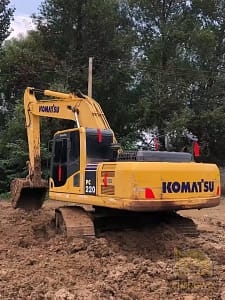 once a paperwork exercise for importers of raw materials like steel and aluminum has evolved into a tangible cost that is sending shockwaves through global supply chains . However, for traders and operators in the heavy equipment sector—specifically those dealing in excavateurs d'occasion et Autres machines—the real disruption is just on the horizon.
In December 2025, the European Commission proposed a significant expansion of CBAM to cover downstream products, explicitly including a vast array of machinery, vehicle components, and construction equipment . This legislative shift means that the carbon footprint embedded in the steel and aluminum of a bulldozer or a crane will soon determine its market access and price competitiveness in the EU. This article explores the multifaceted impact of the 2026 CBAM regulations on the trade of second-hand heavy machinery, offering a roadmap for compliance and strategic adaptation in a carbon-constrained world.
1.0 The New Regulatory Landscape: CBAM’s 2026 Expansion and Its Scope
The EU CBAM is designed to prevent “carbon leakage” by ensuring that imported goods pay a carbon price equivalent to that imposed on EU domestic producers under the Emissions Trading System (ETS). While initially targeting raw commodities, the 2026 framework introduces a pivotal shift toward manufactured goods.
1.1 From Raw Materials to Finished Goods: Inclusion of Machinery
The original CBAM regulation, which entered its definitive implementation phase in January 2026, covered basic materials like cement, iron, steel, and aluminum . However, the newly proposed amendment, published on December 17, 2025, aims to extend this scope to approximately 180 downstream products. Among these are steel- and aluminum-intensive goods, specifically “machinery, hardware and fabrications, vehicle components, [and] construction equipment” .
For the first time, this explicitly targets the heart of the heavy equipment industry. While “used” goods often have specific customs classifications, the principle is clear: if a machine is predominantly composed of CBAM-covered materials (steel and aluminum), its entry into the EU will trigger a carbon liability. This means that every component, from the chassis of an excavator to the boom of a crane, will be scrutinized for its embedded emissions.
1.2 The 2028 Deadline and the “Precursor” Calculation Method
It is crucial to note that while the proposal is part of the 2026 discussions, the compliance obligation for these downstream goods is slated to begin on January 1, 2028 . This two-year window is a critical period for the used machinery trade to prepare. Importantly, the European Commission has simplified the accounting method for complex goods. Under the new rules, importers will only need to account for the emissions embedded in the “precursors”—essentially the steel and aluminum used to manufacture the machine—rather than the emissions from the assembly process itself .
For example, when importing a excavateur d'occasion, the CBAM obligation will be calculated based on the carbon footprint of the steel plates and aluminum components that went into its original fabrication, not the diesel burned during its assembly or its previous operational life. This distinction is vital for second-hand dealers, as it shifts the focus of data collection upstream to the original manufacturing data.
2.0 Direct Financial Impacts on the Used Excavator and Machinery Trade
The introduction of a carbon price on embedded materials fundamentally alters the cost structure of importing capital goods. For the secondary market, which thrives on cost competitiveness and value retention, this presents both a threat and a new variable in pricing strategy.
2.1 The Cost Calculation: Default Values vs. Actual Emissions
Importers of Autres machines—from agricultural tractors to industrial lifts—will face a binary choice in how they calculate their carbon liability. The first option is to use the default values provided by the EU. These are conservative, often punitive figures set by the Commission based on average emission intensities in the source country. For countries like China, a major exporter of machinery, these default values are set significantly higher than actual industry best practices, creating an immediate cost disadvantage .
The second, more complex option is to use actual embedded emissions. This requires the importer (or the exporter) to provide verified data on the specific carbon footprint of the steel and aluminum used in the machine’s original production. For a excavateur d'occasion manufactured five or ten years ago, obtaining this granular data from the original equipment manufacturer (OEM) can be nearly impossible. Consequently, unless a robust data chain is established, the secondary market will likely be forced into the “default value trap,” paying a premium simply due to the age and opacity of the supply chain.
2.2 Impact on Resale Value and Depreciation Curves
The heavy equipment industry operates on well-established depreciation models. A 10-year-old excavateur d'occasion retains a predictable percentage of its original value based on hours worked and maintenance. CBAM disrupts this model by introducing a new “carbon liability” at the point of re-importation into the EU.
Consider a machine originally manufactured in Japan or South Korea, sold into a third country, and now being traded back into the EU. If the original carbon data is lost, the EU importer must apply the default values for the country of manufacture. This creates a scenario where the residual value of the machine could be significantly reduced by an invisible tax. This new cost may force a wedge in the market, where machines with “proven low-carbon” pedigrees (or those with accessible data) command a premium, while others become financially unviable to import.
2.3 The 50-Tonne De Minimis Threshold and Its Limits
The EU has introduced a “de minimis” threshold to protect small and medium-sized enterprises from excessive bureaucracy. If an EU-based importer imports less than 50 tonnes of CBAM goods (per product category) per calendar year, they are exempt from the financial adjustment .
For traders moving a single, large excavateur d'occasion weighing in at 20-30 tonnes, this threshold offers temporary relief. However, it is a threshold based on the importer, not the shipment. A dealer importing five or six large machines a year could easily exceed the 50-tonne limit, bringing their entire inventory under CBAM compliance. This rule favors small-scale, occasional traders over volume-based stocking dealers.
3.0 Strategic Responses and Supply Chain Transparency
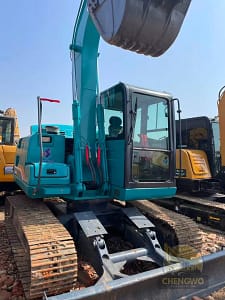 Faced with these challenges, the industry must pivot toward data transparency and strategic sourcing. The “wait and see” approach is no longer viable as 2028 approaches.
3.1 Mandatory Data Collection and the “Carbon Passport”
For the first time, a competitive advantage will be granted to machines with superior data provenance. Industry stakeholders should begin working toward creating a “Carbon Passport” for heavy equipment. For excavateurs d'occasion, this involves a forensic approach to documentation:
-
Sourcing Mill Certificates: Attempting to trace the original steel and aluminum batches used in the machine’s production.
-
OEM Collaboration: Encouraging original manufacturers to maintain and transfer carbon data with the machine’s service history.
-
Utilizing Authorized Defaults: Where data is absent, understanding the specific default values assigned to the country of manufacture and factoring that into the purchase price from the outset.
If an importer sources a excavateur d'occasion from a country with a low grid emission factor (e.g., one relying on hydro or nuclear power) and can prove the steel was made there, the default value will be lower. Conversely, sourcing from regions with coal-intensive grids will carry a higher inherent carbon liability, regardless of the machine’s mechanical condition.
3.2 Navigating Anti-Circumvention Provisions
The 2026 proposal is not just about expansion; it also includes strengthened anti-circumvention tools. The Commission has introduced the concept of “abusive practices,” which includes artificially adjusting supply chains to secure lower default values .
For the used machinery trade, this is a critical warning. Simple re-routing—shipping a machine from a high-carbon jurisdiction through a low-carbon country to “change” its origin for CBAM purposes—will be flagged. Enforcement authorities will require additional supporting documentation to verify the true origin of the goods and the precursors . Legitimate traders must ensure their compliance is based on the actual manufacturing origin, not the last port of call.
3.3 The Competitive Shift Toward “Green” Machinery
While the immediate focus is on compliance cost, the long-term outlook is market differentiation. As carbon prices in the EU ETS are projected to rise to between EUR 120 and 200 per tonne by the mid-2030s, the cost gap between high-carbon and low-carbon machinery will widen .
Dealers who specialize in Autres machines—such as late-model, low-hour equipment made with recycled steel or via electric arc furnace (EAF) processes—will find their products more attractive and easier to sell. Machines manufactured in regions that have already decarbonized their steel sectors will effectively face a lower tariff wall. This could shift sourcing patterns away from traditional heavy manufacturing hubs toward regions investing in green primary production.
Conclusion: Embracing the Carbon Mandate
The 2026 EU Carbon Tariff is more than a trade policy; it is a redefinition of product value. For the excavateur d'occasion et Autres machines sectors, it signals the end of an era where only physical wear and tear determined worth. Now, the embedded carbon from the steel mill decades ago casts a long shadow over the machine’s future marketability.
The industry faces a steep learning curve. From mastering the distinction between default values and actual emissions to navigating the complexities of the 50-tonne threshold, every stakeholder in the supply chain must become literate in carbon accounting. However, within this challenge lies the seed of renewal. By demanding transparency, fostering collaboration with original manufacturers, and prioritizing equipment with a lower carbon legacy, the used machinery trade can not only survive the CBAM transition but thrive as a cornerstone of a truly circular, low-carbon European economy. The window for preparation is narrow; the time to act is now.