


In the complex world of heavy equipment logistics, the question of how to transport excavateurs d'occasion, bulldozers, and industrial components across oceans is a critical business decision. For manufacturers, construction firms, and dealers of Autres machines, the choice between two primary methods—Breakbulk (often referring to Bulk Carriers or General Cargo ships for heavy lifts) and Roll-on/Roll-off (RoRo)—can significantly impact your project timeline, budget, and the physical condition of your valuable assets.
With global supply chains under constant pressure to perform, selecting the wrong shipping method can lead to costly damages, extensive port delays, or expenses that eat into your profit margins on excavateurs d'occasion. This comprehensive guide delves deep into the mechanics, advantages, and limitations of both Breakbulk and RoRo shipping. By understanding the nuances of vessel design, cargo handling, and cost structures, you will be equipped to make an informed choice that aligns perfectly with your machinery specifications and logistical requirements.
1. Understanding the Fundamentals: Design Philosophies and Operational Mechanics
Before comparing costs or transit times, one must appreciate that these two shipping methods are built on diametrically opposed engineering philosophies. Breakbulk shipping relies on vertical lift, while RoRo shipping capitalizes on horizontal roll.
1.1 The Anatomy of a Breakbulk Vessel
-225x300.webp) Breakbulk shipping is the traditional method of moving non-containerized cargo. These vessels are characterized by their open holds and powerful onboard cranes. Unlike container ships, Breakbulk carriers are designed to handle oversized items that cannot fit into a standard box .
Breakbulk shipping is the traditional method of moving non-containerized cargo. These vessels are characterized by their open holds and powerful onboard cranes. Unlike container ships, Breakbulk carriers are designed to handle oversized items that cannot fit into a standard box .
-
Loading Mechanism: The process is purely Lift-on/Lift-off (LoLo). Cargo is hooked to a crane—either the ship’s own gear or a port-side floating crane—hoisted over the side, and lowered carefully into the hold or onto the main deck .
-
Stowage and Flexibility: The cargo holds are typically wide and deep, allowing for the accommodation of irregular shapes like turbine blades, steel girders, or exceptionally long pipes. This method excels at carrying “project cargo” where dimensions are non-standard . For instance, a 30-meter wind turbine blade or an oversized mining truck component that cannot be disassembled finds a natural home on a Breakbulk vessel.
-
Heavy-Lift Capabilities: Modern heavy-lift vessels can boast crane capacities of several hundred tons, making them the only option for exceptionally dense or heavy industrial components like stators or reactor vessels .
1.2 The Anatomy of a RoRo Vessel
Often described as a “floating parking garage,” a RoRo vessel is specifically engineered for wheeled or tracked cargo. The design prioritizes rapid drive-through access .
-
Loading Mechanism: The process is entirely horizontal. Hydraulic ramps (located at the stern, bow, or side) are lowered onto the quay. Vehicles and machinery then drive directly onto the ship under their own power or are towed by terminal tractors onto the multi-story decks .
-
Internal Configuration: Inside, the vessel features fixed or hoistable decks that create layers of parking space. This design is perfect for maximizing the volume of excavateurs d'occasion and vehicles, but it introduces fixed height clearances. Cargo is driven to its designated lane and secured to the deck using lashing points embedded in the structure .
-
Speed of Throughput: The most significant operational advantage of RoRo is speed. A full shipload of vehicles can be loaded in a matter of hours, compared to days for Breakbulk. A vessel can handle thousands of cars—like the BYD Shenzhen carrying 7,000 vehicles—in a single call .
2.Cargo Suitability: Which Method Fits Your Machinery Profile?
The primary deciding factor in the Breakbulk vs. RoRo debate is the physical and mechanical nature of the cargo itself. While there is some overlap, specific characteristics make one method far superior to the other.
2.1 Ideal Candidates for RoRo Shipping
RoRo shipping is the “VIP service” for vehicles and rolling machinery. If your equipment has wheels, tracks, or can be placed on a wheeled platform, RoRo is likely the most efficient option .
-
Self-Propelled Equipment: This is the sweet spot for RoRo. New and excavateurs d'occasion, wheel loaders, backhoes, and agricultural tractors can be driven directly onto the ship. For logistics managers dealing with Autres machines like mobile cranes or heavy trucks, the ability to load without disassembly saves significant time and labor costs .
-
High-Volume Vehicle Shipments: For dealers shipping large fleets of cars, SUVs, or light trucks, Pure Car Carriers (PCC) and Pure Car and Truck Carriers (PCTC) offer unmatched efficiency. The multi-level decks are optimized specifically for this cargo type .
-
Rollable Project Cargo: Even if cargo isn’t self-propelled, it can be made “rollable.” Components placed on self-propelled modular transporters (SPMTs) or multi-purpose bogies can be towed onto a RoRo vessel. This is common for rail cars or large industrial presses that can be skidded onto trailers .
2.2 Ideal Candidates for Breakbulk Shipping
Breakbulk is the “specialist solution” for cargo that defies the shape or size limitations of RoRo decks or lacks the mobility to roll .
-
Non-Rollable and Oversized Cargo: Items that are permanently stationary are the domain of Breakbulk. This includes large transformers, steel structures, massive propellers, and components for power plants. If it doesn’t have wheels and can’t be safely trailered, a crane is required .
-
Dimensionally Challenged Machinery: RoRo decks have fixed height restrictions (typically around 5.2 to 6.1 meters) . A large mining shovel or a specific model of a tall excavateur d'occasion with its boom attached may exceed this limit. While excavateurs d'occasion can often be partially disassembled (lowering the boom) to fit on RoRo, some operators prefer to ship it fully assembled via Breakbulk on an open deck to avoid on-site reassembly labor and expertise.
-
Complex Project Logistics: When shipping a mix of bulk commodities and machinery—for example, a construction project requiring steel beams (Breakbulk) and bags of cement (bulk) alongside an excavator—a geared Breakbulk vessel offers the versatility to handle all of it in one consignment .
3.Cost Analysis: Beyond the Freight Rate
Comparing the price tag of a Breakbulk booking versus a RoRo booking is an apples-to-oranges comparison if you don’t factor in the total logistics spend, often referred to as the “Door-to-Door” cost.
3.1 The True Cost of Breakbulk
At first glance, Breakbulk often appears more economical, especially for oversized cargo where RoRo may require expensive modifications. A comparison chart shows that shipping heavy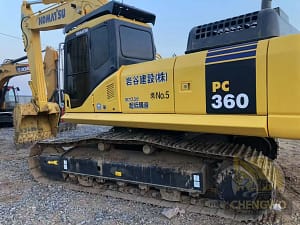 machinery Breakbulk can be 50% cheaper than RoRo in some cases . However, this lower ocean freight rate comes with attached conditions.
-
Heavy Lift and Stevedoring Charges: Breakbulk requires cranes, rigging gear, and specialized stevedores. Every lift incurs a cost. The hourly rate for a heavy-lift crane and the labor team to handle a single excavateur d'occasion can add thousands of dollars to the port charges .
-
Time is Money: A Breakbulk vessel may spend several days in port loading a variety of odd-shaped items. Port waiting times and demurrage (fees for using the port equipment or space beyond the allotted free time) can accumulate.
-
Crating and Preservation: Since cargo is exposed to the elements during loading (and sometimes on deck during voyage), excavateurs d'occasion shipped Breakbulk often require more extensive preservation—like cosmoline spraying, dehumidification, and heavy-duty crating—to prevent salt spray corrosion .
3.2 The Economic Efficiency of RoRo
While the per-unit ocean freight rate for RoRo is often higher than Breakbulk for similar machinery, the total landed cost can be lower due to significant savings in the handling chain .
-
Labor Savings: A RoRo operation requires a fraction of the labor force. Instead of crane operators, signalmen, and a large lashing gang, the primary requirement is drivers to move the excavateurs d'occasion and a smaller team to secure them .
-
Speed of Loading: As noted, a vessel can load hundreds of units in hours. For a shipment of five excavateurs d'occasion, the vessel might be pierside for only two to three hours. This drastically reduces port costs compared to a full day of crane operations .
-
Reduced Packaging: Because cargo is driven into the belly of the ship and protected from the elements inside the decks, the need for heavy export packing is eliminated. The fuel and oil只需要 drained to safety standards, but the expensive wooden crates are unnecessary .
3.3 Hidden Factors and Incidental Fees
-
Disassembly/Reassembly: If a excavateur d'occasion is too tall for a RoRo deck, the cost of removing the boom and arm, storing the pins, and then reassembling it at destination must be factored in. In some cases, the cost of this labor makes the cheaper RoRo rate more expensive than simply shipping it fully assembled via Breakbulk on the weather deck.
-
Insurance Premiums: Insurance rates can vary. The 0.3% damage rate cited for RoRo versus up to 5% for Breakbulk reflects the risk of lifting operations . While Breakbulx has higher handling risk, RoRo has virtually zero lifting risk for the machine itself, which can lead to better insurance premiums for high-value used machinery.
| Feature/Aspect | Breakbulk (LoLo) | RoRo (Roll-on/Roll-off) |
|---|---|---|
| Loading Principle | Vertical lifting with cranes | Horizontal driving on ramps |
| Optimal Cargo | Non-rollable, massive dimensions, project cargo | Wheeled/tracked vehicles, cars, rolling machinery |
| Cost Structure | Lower ocean rate, high terminal handling costs | Higher ocean rate, minimal terminal handling costs |
| Transit Speed | Slower port turns; schedules can be sporadic | Fast port turns; frequent, regular liner schedules |
| Risk Profile | High damage risk during lifts (approx. 5%) | Low damage risk (approx. 0.3%) |
| Size Constraints | Open holds; can accommodate extreme lengths/heights | Fixed by deck height; limited width/lane access |
| Cargo Protection | Exposed to weather during load; deck cargo exposed at sea | Enclosed storage; protected from elements |
4.Risk Management and Cargo Integrity
For high-value assets like construction machinery, the journey is often riskier than the job site. Understanding how each method mitigates physical and operational risk is crucial.
4.1 Physical Damage and Handling Risks
-
Breakbulk Risks: The “lift” is the most dangerous moment in shipping. Swinging a 20-ton excavateur d'occasion from the dock, over the water, and into a hold involves significant pendulum risks. Poor communication between the crane operator and the spotter can result in the machine smashing against the ship”s side. Furthermore, stowage in a hold means Autres machines might be stacked nearby or have steel beams loaded above it, requiring complex and robust blocking and bracing to prevent crushing .
-
RoRo Safety: Once the ramps are raised, the cargo is protected. It is parked on a level deck, similar to a parking garage. The risk of impact damage is confined to the initial drive-on phase (which requires skilled drivers to navigate tight turns) and the voyage itself. Lashing is standardized, using chains and tensioners to hold the track or wheels firmly to the deck. Modern RoRo vessels provide excellent weather protection, keeping excavateurs d'occasion free from saltwater corrosion during the voyage .
4.2 Logistical and Supply Chain Risks
-
Schedule Reliability: RoRo vessels, especially those operated by major liner services for the automotive industry, often run on fixed, reliable schedules. Breakbulk, particularly for smaller parcels, often relies on “tramp” ships that may wait until they are full before sailing, leading to unpredictable delays .
-
Port Infrastructure: Not all ports are created equal. While major hubs have both RoRo ramps and heavy-lift cranes, many developing world ports may lack a proper RoRo ramp (RoRo Berth) but have a mobile harbor crane capable of lifting cargo. Conversely, a port may have a ramp but lack the heavy-lift capacity to load a massive piece of Autres machines that requires Breakbulk .
-
Transshipment Complexity: If your cargo must go to a remote location, it might require transshipment. A Breakbulk shipment might be directly discharged at a final port. A RoRo shipment might require the excavateur d'occasion to be driven off one vessel and onto a smaller feeder vessel, introducing an extra handling step and potential for delay.
5.Regulatory and Preparation Protocols
Whether your cargo moves by Breakbulk or RoRo, strict regulations govern its transport, particularly regarding hazardous materials and customs compliance for excavateurs d'occasion.
5.1 Preparing Used Excavators for Breakbulk
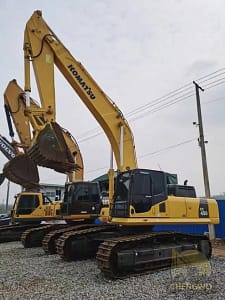 Shipping via Breakbulk often subjects the machinery to more rigorous inspection regarding seaworthiness of the cargo itself regarding stowage, but less regarding “operational” fluids than one might think.
-
Securing: Because the vessel will roll and pitch, the machinery must be welded or chocked and lashed to the tank top or deck. This involves heavy-duty steel welding, which must be ground down and cleaned upon discharge .
-
Preservation: Pelles d'occasion shipped on deck (common for Breakbulk) must be prepared for the elements. Drain plugs are often opened to ensure no rainwater accumulates in the cab, and exhaust pipes are capped to prevent water ingress.
5.2 Preparing Used Excavators for RoRo
RoRo shipping involves specific safety protocols due to the enclosed nature of the vessel and the fact that machinery will be driven on and off.
-
The Battery and Fluids: The battery must be securely clamped to prevent sparks. More importantly, while fuel tanks can be left with fuel for ballast, they must be checked for leaks. Anti-freeze and hydraulic fluids must be at proper levels but free of leaks .
-
The “Drive-On” Condition: For RoRo, the machine must be operationally sound enough to load and unload under its own power. The tracks or tires, engine, and steering must be functional. If a excavateur d'occasion is “dead” (inoperable), it becomes a nightmare for RoRo logistics, requiring heavy tow tractors or trailers to drag it on, which sometimes pushes the cost and complexity back toward Breakbulk territory.
-
Cleanliness Standards: Many countries require excavateurs d'occasion to be cleaned of soil, mud, and plant matter to comply with biosecurity laws (ISPM 15 for wood packaging, but also general cleanliness). For RoRo, the visual inspection upon driving off is often stricter, as mud falling onto the clean decks of a car carrier is a major issue .
-
Documentation: Whether shipping excavateurs d'occasion ou Autres machines, the documentation is critical. For used goods, the original invoice, proof of ownership, and in some jurisdictions, a certificate of disinfection (for the machine itself, not just wood packaging) is required. Special attention must be paid to the Harmonized System (HS) code classification to ensure correct duty payments, particularly for used equipment over a certain age .
Conclusion
Choosing between Breakbulk and RoRo shipping for your heavy machinery is a strategic decision that hinges on three core variables: the machine itself, the budget, and the timeline.
Opt for Breakbulk shipping when you are dealing with cargo that defies standard dimensions—items that are too tall, too wide, or too long for the fixed decks of a RoRo vessel. It is the method of choice for project cargo that is non-rollable, extremely heavy, or oddly shaped. While it offers flexibility for the extraordinary, be prepared for longer port stays and the inherent risks associated with heavy lifting operations. It is the “specialist” tool for the unique job.
Opt for RoRo shipping when your cargo has wheels or tracks and can move. For dealers and contractors shipping standard excavateurs d'occasion, agricultural machinery, or fleets of vehicles, RoRo provides an unbeatable combination of speed, protection, and cost-efficiency when factoring in total logistics. The reduced handling virtually eliminates damage risk, and the rapid turnaround gets your assets to market or job site faster. It is the “production line” tool for the volume job.
In the dynamic field of international logistics, neither method is universally superior. The most successful shippers of Autres machines are those who assess their cargo holistically, consult with experienced freight forwarders, and match the vessel type not just to the product, but to the entire commercial purpose of the voyage. By weighing the structural needs of your excavateurs d'occasion against the commercial pressures of time and budget, you can navigate these waters smoothly, ensuring your machinery arrives on time, on budget, and ready to work.